
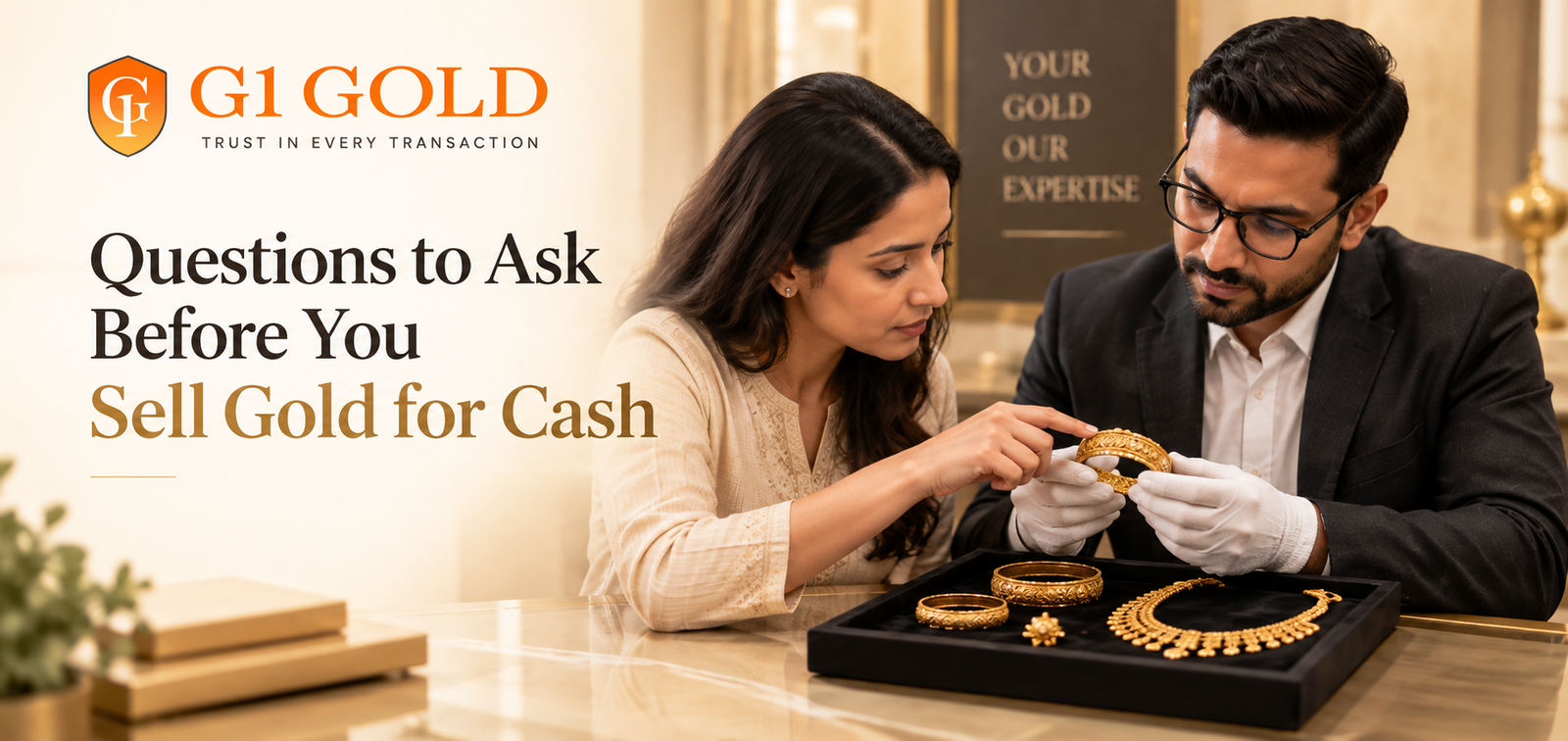
The goal is not to make the process complicated. It is to make sure you know exactly what is happening before you agree to the sale.
1. How Will My Gold Be Tested?
The first question should be about purity testing.
Gold jewellery is rarely made of pure 24K gold because pure gold is too soft for regular use. Jewellery is usually made in different purity levels such as 22K, 18K, or 14K.
Before accepting any offer, ask:
- Which testing method will be used?
- Will the testing happen in front of me?
- Will my jewellery be damaged during testing?
- Can I see the purity result myself?
Modern testing methods such as XRF can help determine the composition of gold without unnecessarily damaging the jewellery.
You should understand the result before moving to the next step. If your jewellery is identified as 22K, for example, ask how that purity percentage is being used to calculate the value.
2. What Is the Exact Weight of My Gold?
Weight has a direct impact on the amount you receive.
Ask the buyer to weigh your jewellery in front of you using a clearly visible digital weighing scale. Do not rely only on an estimated weight.
You should also understand whether the displayed weight includes:
- Stones
- Beads
- Threads
- Clasps
- Non-gold attachments
- Other decorative materials
If these components are present, ask how their weight will be separated from the actual gold weight.
Knowing the gross weight and net gold weight gives you a clearer picture of how the final calculation is being made.
3. Which Gold Rate Are You Using?
This is one of the most important questions to ask before you sell gold for cash.
Gold rates change regularly. The value offered for your jewellery should therefore be based on the applicable market rate and the purity of your gold.
Ask the buyer:
- What is today’s gold rate?
- Is the rate being calculated per gram?
- Which purity level is the rate based on?
- How is my jewellery’s purity adjusted against that rate?
Do not assume that the market rate you see online is automatically the exact rate you will receive. The final valuation depends on purity, net gold weight, and the buyer’s calculation method.
What matters most is whether the calculation is clearly explained.
4. How Is the Final Amount Calculated?
You should never have to guess how the quoted amount was reached.
Ask for a simple breakdown of the calculation.
A proper explanation should normally include:
Net gold weight × applicable purity value × current rate = estimated gold value
Any deductions should then be shown separately.
For example, if your jewellery contains non-gold materials, their weight may need to be removed before the final value is calculated.
The buyer should be able to explain the difference between the total weight, net gold weight, purity percentage, gold rate, and final payable amount.
If the numbers are unclear, ask again before proceeding.
5. Are There Any Deductions or Charges?
This question can prevent surprises at the end of the transaction.
Ask whether there are charges related to:
- Gold testing
- Handling
- Processing
- Melting
- Service fees
- Commission
- Other deductions
Do not focus only on the quoted rate per gram. A strong rate can look attractive, but multiple deductions can reduce the final amount you actually receive.
The figure that matters is the net amount payable to you.
Ask the buyer to confirm this figure before you complete the transaction.
6. Will I Know the Final Amount Before I Agree?
You should know the complete payable amount before making the final decision.
Avoid situations where jewellery is processed further before you are told how much you will receive.
Ask clearly:
“What is the final amount I will receive after all deductions?”
Once you know that number, you can decide whether the offer works for you.
There should be no pressure to accept immediately. A gold sale is a financial transaction, and you should have enough information to make a comfortable decision.
7. What Documents Will I Need?
Gold buyers may require identification and transaction details to complete the sale properly.
Before visiting, ask which documents you need to carry. This may save time during the process.
Common requirements can include:
- Government-issued identity proof
- Address proof, depending on the transaction
- Bank or payment details where required
- Basic ownership confirmation
Requirements can vary, so checking in advance is useful.
8. How Will I Receive the Payment?
Do not wait until the final stage to ask about payment.
Confirm the available payment options before agreeing to sell your gold.
You may want to ask:
- Is payment made through bank transfer?
- Are digital payment options available?
- How long will payment take?
- Will I receive a transaction receipt?
A clear payment process is just as important as a clear valuation process.
9. Will I Receive a Receipt for the Transaction?
Always ask for written proof of the transaction.
A receipt can help you keep a record of the jewellery sold, the value received, and the transaction date.
Where applicable, the receipt should include details such as:
- Gold weight
- Purity
- Rate used
- Final amount
- Payment method
- Transaction date
Keeping proper documentation makes the process more transparent.
10. Can I Walk Away If I Do Not Accept the Offer?
You should be able to review the valuation before deciding.
Ask whether there is any obligation to sell after testing.
If the quoted amount does not meet your expectations, you should understand what happens next. Clarify this before handing over your jewellery for any irreversible process.
A valuation should help you make a decision, not force you into one.
Make the Decision Based on the Final Value
When you plan to sell gold, do not judge an offer only by advertisements or the quoted rate per gram.
Focus on the complete calculation.
Before completing the sale, make sure you know:
- The purity of your gold
- The exact net gold weight
- The gold rate being used
- Every deduction being applied
- The final amount you will receive
- The payment method
- Whether you will receive proper documentation
Asking these questions gives you more control over the transaction and helps you understand exactly what you are agreeing to.
When you sell gold for cash, clarity should come before commitment.
Frequently Asked Questions
1. Should I check the gold rate before selling my jewellery?
Yes. Checking the current gold rate gives you a useful reference point. However, your final amount will also depend on purity, net gold weight, and any applicable deductions.
2. Does the total jewellery weight determine the final value?
Not always. Jewellery may contain stones, beads, threads, or other non-gold materials. The net gold weight is generally more relevant when calculating the actual gold value.
3. Can I ask to see the purity test result?
Yes. It is reasonable to ask how your gold is being tested and to understand the purity result before accepting the valuation.
4. Why can two gold buyers offer different amounts?
Different buyers may use different valuation methods, deductions, rates, and processes. Comparing only the rate per gram may not show the full picture. Compare the final payable amount instead.
5. What is the most important question to ask before selling gold?
Ask: “What is the final amount I will receive after all calculations and deductions?” This gives you the clearest understanding of what you will actually receive before completing the sale.