
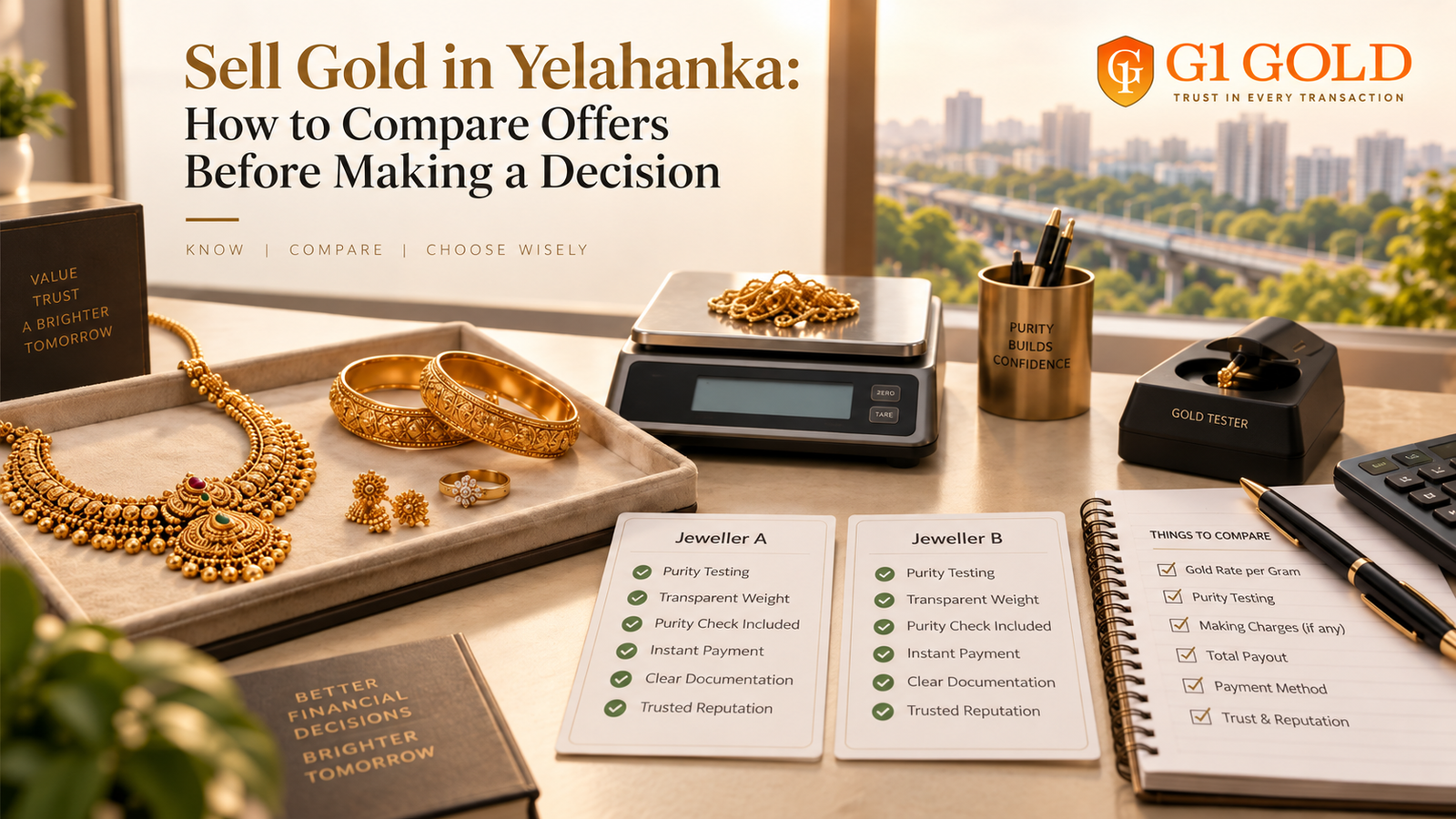
Sell Gold in Yelahanka can be a practical option when you have old, unused, broken, or unwanted jewellery and want to convert it into money. Choosing the right place matters, and your decision should not be based only on the first price you hear.
Comparing offers can help you understand whether the valuation is clear and reasonable. You should know how your jewellery is tested, what weight is considered, which rate is applied, and whether any deductions are made.
Why Comparing Gold Offers in Yelahanka Matters
Gold has a market-linked value, but jewellery is valued using more than the daily rate. The final amount may depend on purity, net weight, non-gold materials, deductions, and the valuation method.
This is why two buyers can provide different amounts for the same jewellery. Instead of asking only, “What price will you give me?”, ask how the final amount was calculated.
What Should You Compare Before You Sell Gold in Yelahanka?
1. Gold Purity
Purity has a direct impact on jewellery value. A piece marked 22K may still be tested before the final valuation, especially if it is old, repaired, soldered, or contains mixed components.
Ask the buyer to explain the purity result. You should know the karat or purity percentage identified during testing and how it affects the valuation.
2. Net Gold Weight
The total weight of jewellery may include stones, beads, thread, enamel, springs, or other materials. These are not always considered as gold during valuation.
Ask the buyer to show the gross weight, any non-gold weight, and the final net gold weight. Even a small difference can affect the final amount.
3. Gold Rate Applied
Check the approximate gold rate before visiting a buyer. Remember that the rate for 24K gold is different from 22K, 18K, or lower purity jewellery.
Ask which rate is being used and whether it is based on the current market rate. This gives you a better reference when comparing quotations.
4. Deductions
Deductions can change the final payout. Some valuations may include deductions for stones, impurities, testing, melting, or other processing factors.
Before agreeing to sell, ask:
- Are there any deductions?
- What is each deduction for?
- How much is being deducted?
- What amount will I receive after deductions?
A clear quotation should make these figures easy to understand.
Do Not Compare Advertised Rates Alone
A high advertised rate can attract attention, but it does not always mean you will receive the highest amount. One buyer may promote a high rate but apply more deductions, while another may provide a better final payout.
The better question to ask is:
“How much will I actually receive after purity, weight, and deductions are considered?”
The final payable amount is more useful than the promotional rate when comparing offers.
How to Compare Two Gold Offers Properly
When you receive quotations from two buyers, compare the same details side by side:
- Tested purity
- Net gold weight
- Rate applied
- Deductions
- Final payable amount
- Payment method
- Transparency of the process
The purpose is to understand exactly what you are agreeing to.
Step-by-Step Process Before You Sell Gold in Yelahanka
1.Check the Current Gold Rate
Before visiting a buyer, check the approximate market rate. This gives you basic knowledge before the valuation starts.
2.Ask for Purity Testing
Purity should be tested and explained clearly. Ask what result was found and how it affects the price.
3.Check the Weight
Watch the weighing process. If your jewellery contains stones or other materials, ask how the net gold weight is calculated.
4.Review the Valuation
Ask the buyer to explain how purity, weight, and the applicable gold rate are used to calculate the value.
5.Check Deductions
Confirm whether any amount is being deducted and why.
6.Confirm the Final Amount
Do not make a decision until you know the exact amount you will receive.
7.Approve or Decline
A valuation does not mean you must sell. You should be free to accept, compare another quotation, or decide not to proceed.
At a professional gold buying company such as G1 Gold, customers can ask questions about purity, weight, valuation, and payment before making their decision.
Questions to Ask Before Selling
A few direct questions can make the comparison process easier.
Ask the buyer:
- What purity did my gold test at?
- What is the net gold weight?
- Which gold rate are you applying?
- Are there any deductions?
- What is the final payable amount?
- How will payment be made?
- Will I receive transaction proof?
Clear answers make it easier to compare one offer with another.
Documents You May Need When Selling Gold in Yelahanka
Gold buyers may ask for valid identification before completing a transaction. Depending on the company, this may include Aadhaar, PAN, bank details, address proof, or a purchase bill if available.
Check the required documents before visiting to avoid unnecessary delays during the transaction.
What Warning Signs Should You Watch For?
Be careful if the valuation feels unclear or rushed.
Warning signs may include:
- Purity testing is not explained
- Weight is not shown clearly
- The gold rate changes without explanation
- New deductions appear at the final stage
- You are pressured to sell immediately
- Payment terms are unclear
Selling gold should be your decision. You should understand the offer before agreeing.
Is the Highest Offer Always the Best?
Not necessarily. A good offer should combine competitive value with a transparent process.
You should clearly understand purity, net weight, the applied rate, deductions, and final amount. If you cannot understand where the quote came from, a higher number alone should not decide the sale.
Transparency can be especially important when two quotations appear similar. Knowing exactly how your gold was valued helps you make a more confident comparison.
Simple Checklist Before Making Your Decision
Before you sell gold in Yelahanka, check these points:
- Check the approximate current gold rate
- Understand the purity result
- Confirm the net gold weight
- Ask which rate is being applied
- Understand every deduction
- Compare the final payable amount
- Confirm the payment method
- Carry required documents
- Ask questions if something is unclear
- Do not sell under pressure
Following this checklist helps you focus on the actual value you will receive rather than only advertisements or verbal promises.
Why Transparency Matters When Selling Gold
Gold jewellery often carries both financial and personal value. That is why the selling process should never feel confusing.
You should be able to see how your gold is tested, understand the weight being considered, know the rate being used, and receive a clear explanation of the final value.
When these details are visible, comparing offers becomes easier.
It also reduces the chance of making a decision based only on promotional claims.
A transparent gold buyer should give you enough information to decide whether the offer is right for you without creating unnecessary pressure.
Take Time Before Making the Final Decision
There is no need to accept the first quotation immediately.
If something is unclear, ask the buyer to explain it. If you are still unsure, compare another quotation.
Even comparing two offers can help you identify differences in:
- Purity assessment
- Gold weight
- Rate calculation
- Deductions
- Final payout
Taking a few additional minutes before selling can give you much better clarity about the value of your jewellery.
Conclusion
If you are planning to sell gold in Yelahanka, take time to compare offers before making your final decision. Do not choose a buyer only because of a high advertised gold rate or a quick verbal quotation.
Look at the complete valuation. Check purity, net gold weight, the rate applied, deductions, and the amount you will actually receive. Also consider whether the process is transparent and whether your questions are answered clearly.
G1 Gold follows a customer-focused approach where customers can understand the important valuation details before choosing whether to proceed.
A careful comparison can help you make a more informed decision and choose an offer you fully understand.
Frequently Asked Questions
1. Should I compare offers before sell gold in Yelahanka?
Yes. Comparing offers can help you understand differences in purity, net weight, gold rate, deductions, and final payout before making a decision.
2. Why do gold buyers give different prices for the same jewellery?
The amount can vary depending on purity results, net gold weight, the rate used for valuation, and deductions applied by each buyer.
3. What Should I Check First When Comparing Offers to Sell Gold in Yelahanka?
Start with tested purity, net gold weight, current gold rate, deductions, and final payable amount. These factors provide a clearer comparison.
4. Do I have to sell after getting my gold valued?
No. You can review the valuation, compare another offer, or decide not to proceed if you are not comfortable with the quotation.
5. Can old or broken jewellery be sold?
Yes. Old, damaged, broken, or unused gold jewellery can generally be evaluated based on its actual purity and net gold content.