
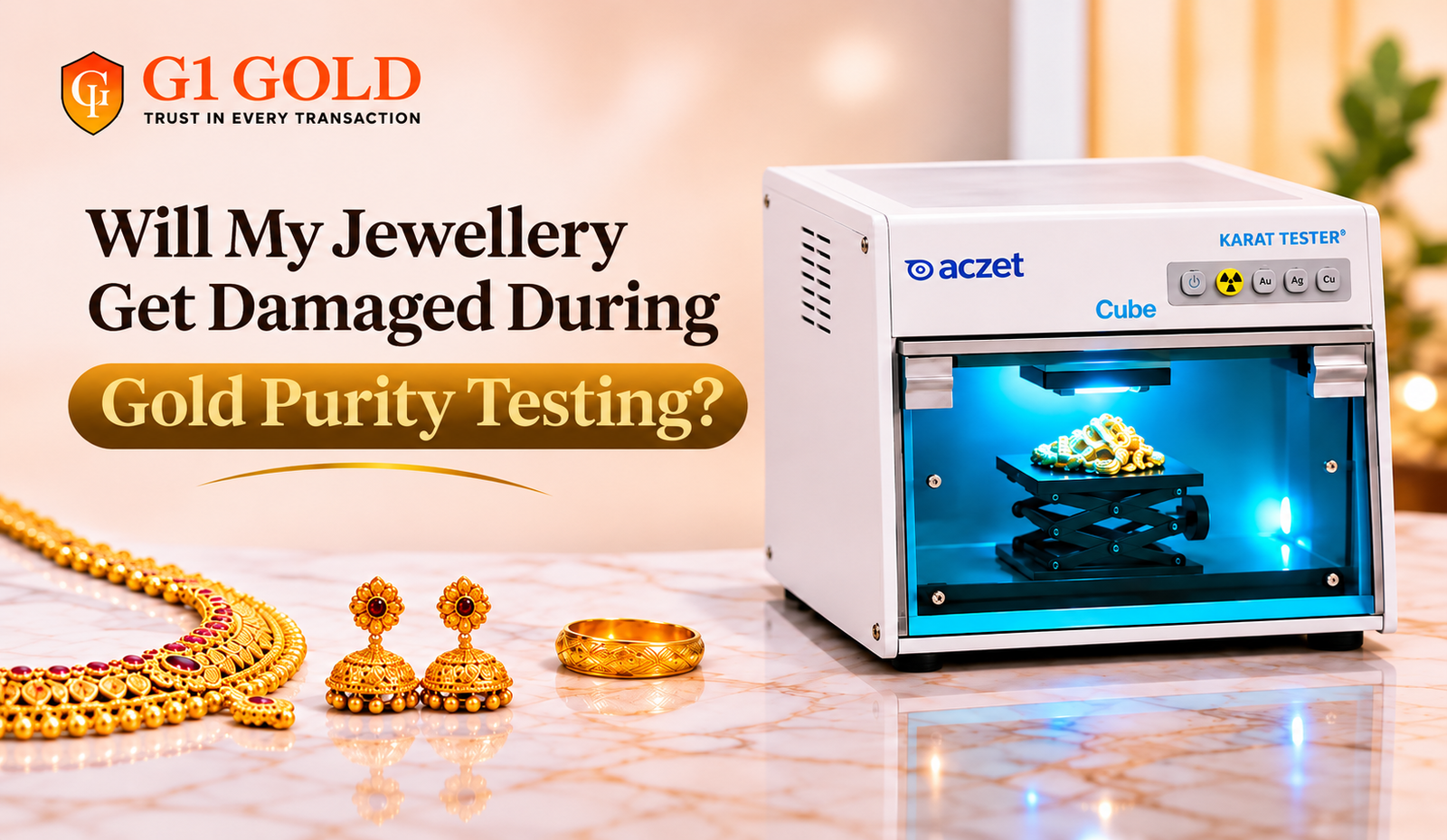
Your gold jewellery is more than just something valuable. It may bring back special memories, like a necklace from your parents, your wedding ring, or earrings passed down through your family. Before selling these precious items, you may wonder if gold purity testing could damage your jewellery. When you decide to sell your gold, you want to make sure it stays safe. One common question is: Will my jewellery get damaged during gold purity testing?
Today, gold purity can be checked without scratching, cutting, or melting your jewellery. Modern testing machines make this possible. However, not all testing methods work the same way. At G1 Gold Company, customers can learn how their gold is tested before deciding to sell it.
1. Why Is Gold Purity Testing Important Before Selling?
Two gold ornaments may look similar but contain different amounts of pure gold.
For example, a 22K gold chain contains more pure gold than an 18K chain of the same weight.
Gold purity testing helps identify:
- The amount of pure gold in your jewellery.
- Whether your jewellery is 18K, 22K, or another purity.
- Other metals mixed with the gold.
- How purity affects the final selling price.
Testing helps you understand your jewellery’s value before accepting an offer.
2. Can Gold Purity Testing Damage Your Jewellery?
Some older gold testing methods may leave small marks on your jewellery. However, modern testing methods can check gold purity without causing damage. A traditional touchstone test involves rubbing jewellery against a testing stone. This may leave minor scratches, especially on polished surfaces.
Other methods may involve filing or removing a small amount of metal. Modern X-ray fluorescence (XRF) testing works differently. It checks metal composition without scratching, cutting, or melting the ornament. Always ask which testing method will be used before handing over your jewellery.
3. How Does XRF Gold Purity Testing Work?
XRF technology is used to identify metals present in gold jewellery. The machine uses X-rays to check the surface of your jewellery. It then shows which metals are present and how much of each metal it detects.
The testing process generally includes:
- The jewellery is placed inside the testing machine.
- The equipment scans the exposed surface.
- The machine displays the detected metal composition.
- The buyer explains the purity readings.
- The results help determine the gold valuation.
XRF testing is generally quick and does not physically damage jewellery. However, XRF mainly measures surface composition. Gold plating or unusual metal structures may require additional checks.
4. What About Jewellery With Stones or Delicate Designs?
Some gold jewellery has stones, small parts, or delicate designs. These pieces need extra care during testing.
Here are a few things to check:
- Rings with stones: Ask how the weight of the stones will be removed from the total gold weight.
- Antique jewellery: Make sure the jewellery is handled carefully to protect its design.
- Hollow bangles: Tell the buyer if your bangles are weak, damaged, or repaired.
- Necklaces with stones: Make sure no stones are removed without your permission.
- Broken jewellery: Ask how the broken or loose pieces will be checked.
XRF testing usually does not damage stones or delicate designs. However, the buyer should handle your jewellery with care throughout the testing process.
5. Does Gold Jewellery Need to Be Melted for Purity Testing?
No. Gold jewellery does not always need to be melted to check its purity. Modern testing equipment can assess gold composition without changing the jewellery’s original shape. However, additional testing may be needed for complex or suspicious items.
If melting is suggested, ask:
- Why is melting necessary?
- Is another testing method available?
- Will my jewellery lose its original shape?
- Can I receive an estimated value before agreeing?
Never agree to melting without understanding the process.
6. What Should You Check Before Gold Testing?
Before visiting a gold buyer, ask a few simple questions about the testing process. This will help you understand how your jewellery will be checked.
- Will the testing leave scratches or marks?
- Can I watch the entire testing process?
- What equipment will be used?
- Will the jewellery be weighed in front of me?
- Can I reject the offer after testing?
These questions help you avoid unexpected problems. Check your jewellery before and after testing. Pay extra attention to stones, small parts, and delicate designs.
7. How Modern Gold Testing Helps Customers
At G1 Gold Company, customers can see how their gold is tested before they decide to sell it. The company uses a German XRF machine to check how much pure gold is present in the jewellery. This test does not require cutting or melting the gold. Customers can watch the test, see the results, and learn how the price of their gold is calculated.
The final offer depends on factors such as:
- Gold purity.
- Eligible gold weight.
- Applicable gold market rate.
Understanding these details helps customers decide whether to proceed with the sale.
Frequently Asked Questions
1. Will XRF gold testing scratch my jewellery?
No. XRF testing does not require scratching or cutting jewellery. However, careful handling is still necessary.
2. Can I test gold jewellery without selling it?
Some gold buyers offer purity testing without requiring a sale. Check their testing policy before visiting.
3. Is gold testing safe for antique jewellery?
Non-destructive XRF testing is generally suitable for antique gold. Fragile designs may require extra handling precautions.
4. Can gold purity testing identify fake gold?
XRF testing can help check whether your jewellery contains other metals. However, some fake or gold-plated items may need further testing.
5. How long does gold purity testing take?
An XRF measurement usually takes seconds to a few minutes. Complete inspection and valuation may take longer.
Conclusion
Gold purity testing does not always involve scratching, cutting, or melting jewellery. Modern XRF technology can check gold composition while preserving the ornament’s physical condition. Before testing, understand the method, ask questions, and review the results.
If you want to sell gold in Bangalore, G1 Gold Company offers XRF gold testing. Customers can understand their gold’s purity and value before deciding to sell. Your jewellery should be handled with care. You should also know how much your gold is worth before making a decision.