
Tag: Released pledge gold

  • How to Sell Gold in Bangalore: Gold Rates, Purity Testing & Valuation

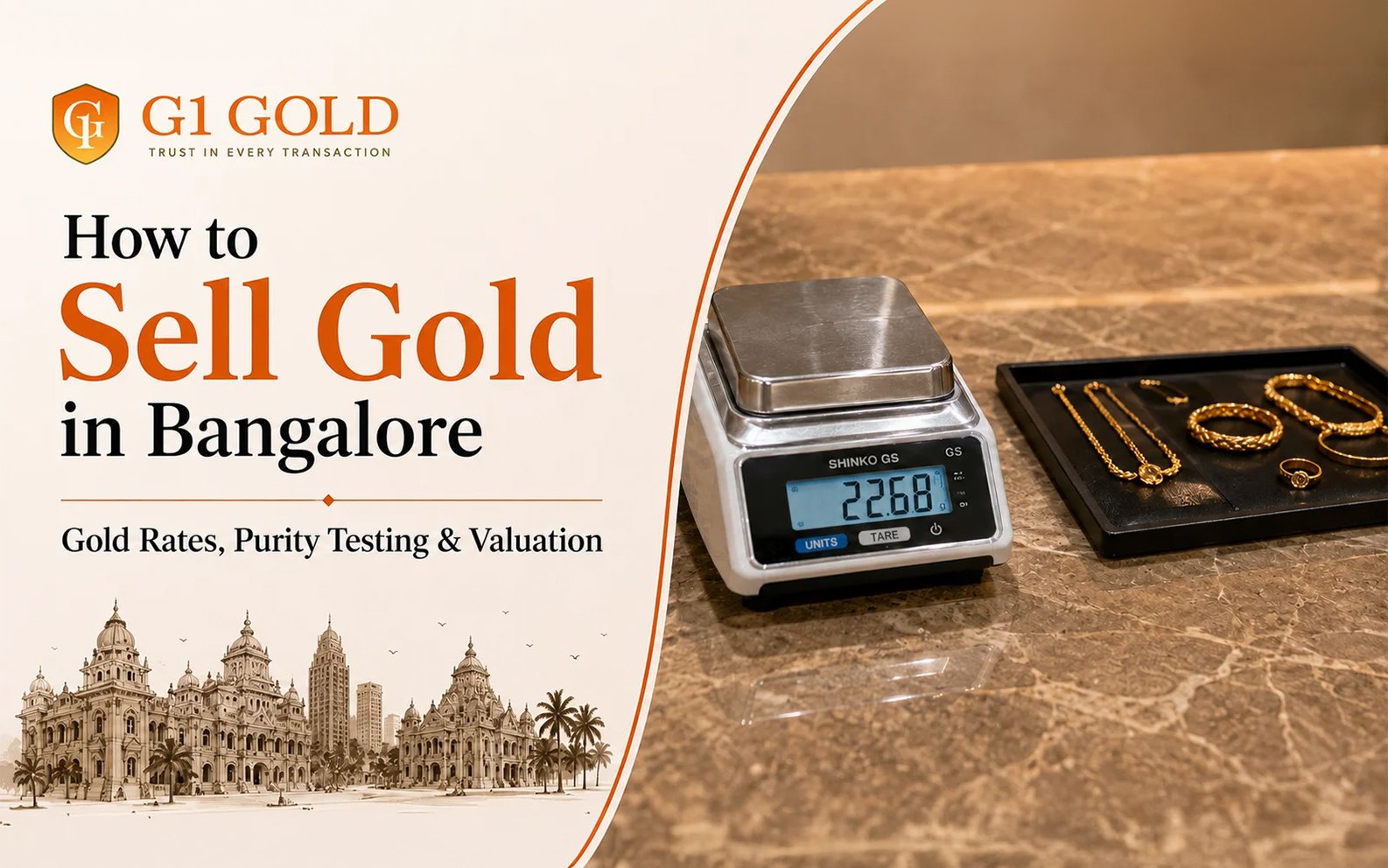
    How to Sell Gold in Bangalore: Gold Rates, Purity Testing & Valuation

    Selling gold is not simply a matter of checking the day’s gold rate and handing over your jewellery. If you plan to sell gold in Bangalore, the amount you finally receive depends on several factors, including the purity of the gold, its net gold weight, the applicable market rate, and the valuation method used by the buyer.

    For people in Bangalore, understanding these steps before visiting a gold buyer such as G1 Gold can make the process much easier. Whether you have old jewellery, broken ornaments, coins, chains, rings, or gold that has been sitting unused for years, knowing how the valuation works helps you make an informed decision.

    This guide from G1 Gold explains how to sell gold in Bangalore, what happens during purity testing, how gold rates affect your final value, which documents may be required, and what you should check before accepting an offer.

    Why People Sell Gold in Bangalore

    Gold often stays in homes for years without being used. Old designs may no longer suit you, damaged jewellery may remain in a locker, or inherited pieces may not have any practical use. If you are planning to sell gold in Bangalore, these unused gold items can be evaluated based on their purity, weight, and current market value.

    Selling can turn that unused asset into money when you have a specific financial requirement.

    Common reasons include:

    • Selling old or damaged jewellery that is no longer being worn
    • Converting inherited gold into usable funds
    • Selling broken chains, rings, bangles, or other ornaments
    • Releasing value from gold that has been kept unused
    • Funding personal, household, or business requirements
    • Choosing to sell when the prevailing gold rate is attractive

    The important point is that the value of old jewellery is primarily connected to the gold content and purity, rather than how fashionable or expensive the original design was.

    Step 1: Check the Current Gold Rate

    The first thing to understand is the current gold rate.

    Gold prices can change frequently because they are influenced by international gold prices, currency movements, market conditions, and domestic factors. Therefore, the rate you see today may not be the same as yesterday’s or tomorrow’s rate.

    Before selling gold in Bangalore, check the applicable rate for the purity of your gold.

    For example:

    • 24K gold represents very high purity and is commonly associated with investment-grade gold.
    • 22K gold contains a lower proportion of pure gold than 24K.
    • 18K gold contains a higher proportion of other metals and therefore has a different gold value.
    • Other purities are valued according to their actual gold content.

    Do not compare only the headline 24K rate with the amount offered for jewellery. Your jewellery may have a different purity, and the final calculation needs to account for that.

    Step 2: Have Your Gold Weighed

    Once you approach a gold buyer, the jewellery is weighed to determine its total weight.

    This is an important stage because the final valuation is linked to the quantity of gold being evaluated.

    However, the total weight of a jewellery item does not always represent the weight of pure gold.

    For example, jewellery may contain:

    • Precious or semi-precious stones
    • Beads
    • Lac or other filling materials
    • Clasps and non-gold components
    • Other metals used to create the ornament

    This is why total jewellery weight and net gold weight should not automatically be treated as the same figure.

    A clear valuation process should explain what is being weighed and how the final gold weight is determined.

    Step 3: Gold Purity Testing

    Purity is one of the most important parts of gold valuation.

    A piece may be described as 22K, 18K, or another purity based on its hallmark, previous purchase information, or the owner’s understanding. However, the actual purity can be tested before the final value is calculated.

    BIS explains that hallmarking is the official determination and recording of the proportion of precious metal in an article. Consumers can also have jewellery or samples tested through BIS-recognized Assaying & Hallmarking Centres.

    Depending on the buyer and the type of gold being evaluated, testing methods may include non-destructive analysis such as XRF testing.

    A proper testing process should make the result understandable to you.

    You should be able to ask:

    • What purity was detected?
    • What testing method was used?
    • What is the net gold weight?
    • Which gold rate is being applied?
    • How was the final amount calculated?

    These questions are particularly useful when selling older jewellery whose purity may not be immediately clear.

    Step 4: Understand How Your Gold Is Valued

    After weighing and purity testing, the buyer can calculate the gold value.

    A simplified way to understand the calculation is:

    Gold value = Net gold weight × applicable gold rate × purity adjustment

    The actual calculation may vary according to the buyer’s valuation policy and the type of gold being sold.

    For jewellery containing stones or non-gold components, the relevant gold weight needs to be separated from the total article weight.

    This is why two people selling jewellery with the same total weight may receive different amounts.

    The final value can be affected by:

    • Gold purity
    • Net gold weight
    • Applicable gold rate
    • Type of gold item
    • Presence of stones or other materials
    • Buyer’s valuation terms
    • Applicable deductions, if any

    The key is not simply to ask, “What is today’s gold rate?”

    Instead, ask, “How did you arrive at my final value?”

    That question gives you a much clearer understanding of the transaction.

    Step 5: Review the Final Calculation Before Selling

    Before accepting an offer, take a moment to review the calculation.

    A transparent valuation should allow you to understand the major figures involved rather than presenting only one final amount.

    Check:

    • Gross weight
    • Deducted non-gold weight, where applicable
    • Net gold weight
    • Purity
    • Rate applied
    • Valuation amount
    • Any applicable deductions
    • Final payable amount

    If something is unclear, ask for an explanation before completing the transaction.

    There is no need to rely solely on the original purchase price of your jewellery. Jewellery bills often include costs such as making charges and design-related expenses that do not necessarily form part of the resale value of the gold itself.

    Documents You May Need

    The documents required can vary depending on the buyer and transaction.

    It is sensible to carry:

    • A valid identity document
    • Bank details if payment is being made through a bank transfer
    • Original purchase invoice, if available
    • Any documentation related to pledged or inherited gold, where applicable

    Having the original bill can sometimes help establish background information about the jewellery, although the valuation still depends on the gold being assessed.

    For hallmarked jewellery, BIS also recommends maintaining authentic bills or invoices because they can be useful for dispute resolution and related purposes.

    What to Look for When Selling Gold in Bangalore

    Choosing where to sell is just as important as understanding the gold rate.

    Look for a process where the important stages are clearly explained.

    A good gold-selling process should include:

    • Clear weighing of the jewellery
    • Purity testing that can be explained to the customer
    • A clearly stated rate used for valuation
    • Separation of non-gold materials where applicable
    • An understandable calculation
    • Clear communication about deductions
    • Proper documentation
    • Secure handling of the jewellery
    • Payment through a clearly explained method

    You should never feel pressured to accept an amount you do not understand.

    If the buyer cannot explain how the final amount was calculated, ask for clarification before proceeding.

    Can You Sell Broken or Old Gold?

    Yes. Gold does not have to be in perfect condition to have metal value.

    Broken chains, damaged bangles, single earrings, outdated rings, and other unused ornaments may still contain recoverable gold.

    The design may no longer have much relevance to the transaction, but the underlying gold can still be assessed.

    This is particularly useful for people who have jewellery sitting unused simply because it is damaged or no longer wearable.

    What About Gold With Stones?

    Jewellery containing stones requires additional care during valuation.

    The total weight of the ornament is not necessarily the same as the weight of the gold.

    A buyer may need to account for:

    • Stone weight
    • Other non-gold materials
    • Gold purity
    • Actual gold content

    Ask how these components are being considered before agreeing to the final amount.

    A transparent explanation can help avoid confusion about why the amount offered differs from what you expected based on the jewellery’s total weight.

    Final Checklist Before Selling Gold

    Before completing the sale, keep these points in mind:

    • Check the current gold rate.
    • Know the approximate purity of your jewellery.
    • Check hallmark and HUID details if available.
    • Ask for the jewellery to be weighed clearly.
    • Understand the difference between gross and net gold weight.
    • Ask how purity is being tested.
    • Ask which rate is being applied.
    • Request a clear explanation of the valuation.
    • Understand every applicable deduction.
    • Review the final amount before confirming the transaction.
    • Keep the relevant transaction documentation.

    Selling gold becomes much simpler when you understand what determines its value. The goal is not merely to find a buyer, but to understand the complete journey from gold testing to final payment.

    For anyone looking to sell gold in Bangalore, taking a few minutes to understand the rate, purity, weight, and valuation can make the entire experience more straightforward and informed.

    Frequently Asked Questions

    1. How is gold valued when I sell jewellery in Bangalore?

    Gold is generally valued based on factors such as purity, net gold weight, and the applicable gold rate. Jewellery containing stones or other non-gold components may require additional weight adjustments before the gold value is calculated.

    2. Do I need a hallmark to sell old gold?

    No. Old hallmarked and unhallmarked jewellery can be sold. The gold can be assessed through an appropriate purity testing and valuation process. BIS confirms that consumers can sell both old unhallmarked and hallmarked jewellery.

    3. Can I sell broken gold jewellery?

    Yes. Broken chains, damaged rings, single earrings, old bangles, and similar items can still have value based on their gold content. The condition of the design does not necessarily determine the underlying metal value.

    4. How does purity affect the amount I receive?

    Purity indicates the proportion of gold present in the article. Higher-purity gold contains more gold by weight, so purity is an important factor in calculating the value of jewellery.

    5. What is HUID in gold jewellery?

    HUID stands for Hallmark Unique Identification number. It is a six-digit alphanumeric number associated with hallmarked gold jewellery. BIS states that consumers can use the BIS Care app’s Verify HUID feature to check it.

    6. Does the original jewellery purchase price determine its resale value?

    Not necessarily. The original purchase price may include making charges, design costs, and other components. When selling gold, the valuation generally focuses on the gold content, purity, weight, and applicable rate rather than simply returning the original purchase price.

    7. What should I ask before selling my gold?

    Ask for the purity result, gross and net weight, applicable gold rate, calculation method, and details of any deductions. Understanding these figures before confirming the sale makes it easier to evaluate the offer and avoid unnecessary confusion.

  • How to Release Pledged Gold Without Confusion or Last-Minute Pressure

    How to Release Pledged Gold Without Confusion or Last-Minute Pressure

    Pledging gold is common during urgent financial needs. Many people use their jewellery to manage medical expenses, business needs, school fees, family functions, or sudden cash shortages. At that moment, pledging gold feels like a practical option because it gives quick money without selling the ornament. Later, when the loan amount, interest, or due date becomes difficult to manage, finding the right way to Release Pledged Gold becomes important.

    But the real pressure starts later, when the repayment date comes closer. Interest keeps increasing, reminders begin, and many families start worrying about whether they can release the pledged gold on time. Some people delay because they do not know the process. Some feel confused about the amount to be paid. Others fear losing jewellery that has emotional value.

    The good news is that releasing pledged gold becomes easier when you understand the steps clearly. You do not have to wait until the last day or make a rushed decision. With proper planning, you can check your loan details, understand the payable amount, compare your options, and decide the safest way to recover your gold.

    What Does Releasing Pledged Gold Mean?

    Releasing pledged gold means taking back the gold jewellery you gave as security for a gold loan. When you pledged your gold, the lender gave you money based on the gold’s purity, weight, and value. To get your gold back, you need to repay the loan amount along with interest and any applicable charges.

    Once the payment is completed, the lender returns your pledged gold items.

    This process sounds simple, but confusion usually happens because people do not check the full repayment amount in advance. The final amount may include:

    • Principal loan amount
    • Interest amount
    • Late payment charges, if any
    • Renewal charges, if applicable
    • Processing or closing charges, depending on the lender
    • Notice or auction-related charges, in delayed cases

    That is why the first step is always to understand the exact amount required to release your gold.

    Why People Feel Pressure While Releasing Pledged Gold

    Many customers do not feel stressed when they pledge gold. The pressure usually starts when the due date is near. The most common reasons are:

    • Interest has become higher than expected
    • Loan renewal date is missed
    • The lender sends auction notice
    • The family does not have enough funds ready
    • The pledged jewellery has emotional or family value
    • The person does not understand the calculation clearly
    • There is confusion between paying interest and closing the full loan

    This is why waiting until the last moment is risky. Even if you cannot repay immediately, you should check the status early and know your available choices.

    Step 1: Collect Your Pledge Details

    Before making any decision, collect all details related to your pledged gold. Do not depend only on memory or rough estimates.

    Keep these details ready:

    • Pledge receipt or loan receipt
    • Name of the lender
    • Loan account number
    • Date of pledging
    • Original loan amount
    • Gold item details
    • Approximate gross weight
    • Interest rate
    • Due date or renewal date
    • Any notice received from the lender

    If you do not have the receipt, visit the lender with your ID proof and registered mobile number. Most lenders can trace the pledge using your name, phone number, or loan account details.

    Step 2: Ask for the Exact Release Amount

    Do not ask only, “How much is the loan?” Instead, ask for the full closing amount.

    You should clearly ask:

    • What is the total amount required to release my gold today?
    • How much is principal?
    • How much is interest?
    • Are there any extra charges?
    • Is there any auction notice or deadline?
    • Will the amount change after a certain date?
    • Can I get a written or printed closing statement?

    This avoids last-minute surprises. If the amount is valid only for that day, note it clearly. Gold loan interest can keep changing based on the date, so a delay of even a few days may increase the payable amount.

    Step 3: Check Whether You Want to Release or Renew

    Some people assume that renewal is the only option when they cannot pay the full amount. But renewal is not always the best choice. It depends on your situation.

    Releasing may be better when:

    • You want to take back the jewellery permanently
    • You can arrange the required amount
    • Interest is becoming too high
    • The gold has emotional value
    • Auction risk is near
    • You do not want to continue the loan cycle

    Renewal may be considered when:

    • You need more time
    • You are not ready to close the loan
    • The lender allows renewal
    • The auction date is not close
    • You clearly understand the new terms

    Before renewing, ask how much extra interest you may pay later. Sometimes people renew again and again without realizing that the interest burden is growing.

    Step 4: Understand the Auction Risk

    If a gold loan is unpaid for a long time, the lender may send a notice before auctioning the pledged gold. Many people panic when they receive such a notice, but ignoring it is the worst mistake.

    If you receive an auction notice:

    • Do not delay
    • Contact the lender immediately
    • Ask for the final deadline
    • Ask for the exact amount required to stop the auction
    • Check whether partial payment, renewal, or full closure is possible
    • Get confirmation in writing wherever possible

    Once the gold goes into auction, recovering the exact item can become difficult or impossible. So auction notice cases need fast action.

    Step 5: Compare the Gold’s Current Value

    Before arranging money to release pledged gold, it is useful to understand the current value of your gold. Gold prices may have changed since the day you pledged it.

    For example, if you pledged gold months ago, its current market value may be different now. Knowing the present value can help you decide whether to:

    • Release the gold and keep it
    • Release the gold and sell it later
    • Sell part of the gold after release
    • Use a gold release support service
    • Avoid further interest burden

    A professional gold valuation can help you understand the value based on purity, usable weight, and current gold rate. Brands like G1 Gold usually focus on explaining the gold value clearly before the customer makes a final decision.

    Step 6: Avoid Borrowing Blindly to Release Gold

    Many people borrow from friends, private lenders, or high-interest sources just to release pledged gold quickly. This can create a bigger financial problem.

    Before borrowing, ask yourself:

    • Can I repay this new borrowing comfortably?
    • Is the interest higher than my gold loan interest?
    • Am I solving the problem or shifting it elsewhere?
    • Do I have a clear repayment plan?
    • Is there a safer option?

    Releasing pledged gold is important, but it should not push you into a more expensive debt cycle.

    Step 7: Check If Gold Release Support Is Useful

    In some cases, customers may not have the full amount required to release pledged gold. That is when they look for a service that can help release pledged gold and settle the value after proper checking.

    This option may be useful when:

    • You cannot arrange the full release amount
    • Your gold is close to auction
    • You want to avoid repeated interest payments
    • You want to understand the current gold value
    • You are comfortable selling the gold after release
    • You want a faster settlement process

    Before choosing any service, make sure the process is explained clearly. You should understand who pays the lender, how the gold is checked, how the final value is calculated, and how the balance amount is settled.

    Things to Check Before Choosing a Gold Release Service

    Do not rush because of pressure. Ask the right questions first.

    Check these points:

    • Is the process explained before starting?
    • Will the pledged gold be released in your presence?
    • Is the loan amount verified with the lender?
    • Is the gold tested after release?
    • Are purity and weight explained clearly?
    • Are stones, beads, or non-gold parts separated from the calculation?
    • Is the final settlement explained before confirmation?
    • Are there any hidden charges?
    • Is payment handled safely?

    A genuine process should not make you feel forced or confused.

    Common Mistakes to Avoid

    Many people lose money or face stress because they delay or act without checking details.

    Avoid these mistakes:

    • Waiting until the auction date is very close
    • Not asking for the exact closing amount
    • Assuming the amount is the same as the original loan
    • Ignoring lender calls or notices
    • Renewing the loan repeatedly without calculation
    • Borrowing at very high interest
    • Selling gold without checking purity and weight
    • Not comparing the current gold value
    • Handing over receipts or documents without understanding the process

    Small mistakes can create big pressure when gold is pledged.

    Best Time to Act

    The best time to act is not the last day. The best time is when you first realize repayment may be difficult.

    Act early if:

    • The due date is approaching
    • Interest is increasing
    • You have received a notice
    • You are planning to renew again
    • You want to avoid auction risk
    • You want to understand whether releasing is worth it

    Early action gives you more options. Last-minute action usually gives you fewer choices.

    Conclusion

    Releasing pledged gold does not have to be confusing. The key is to slow down, collect the correct details, ask for the exact payable amount, understand the current gold value, and compare your options before making a decision.

    Your pledged gold may carry both financial and emotional value. Whether it is a chain, bangle, ring, coin, necklace, or family ornament, do not wait until pressure forces you to act quickly. A clear process helps you decide whether to release, renew, sell, or take support.

    If you are unsure about the value of your pledged gold, you can speak with a trusted gold valuation team such as G1 Gold and understand your options before taking the next step.

    Frequently Asked Questions

    1.What does it mean to release pledged gold?

    Releasing pledged gold means repaying the gold loan amount, interest, and any applicable charges to the lender so you can take back your pledged jewellery or gold items.

    2.Can I release pledged gold if I do not have the full amount?

    It depends on your situation and the lender’s rules. Some people arrange funds, renew the loan, or use a gold release support service if they are comfortable with the process and settlement terms.

    3.What happens if I delay releasing my pledged gold?

    If you delay too long, interest may increase and the lender may send an auction notice. If the dues are not cleared within the deadline, the gold may be auctioned.

    4.Should I renew my gold loan or release the gold?

    Renewal may give more time, but it can also increase your interest burden. Releasing is better if you want to close the loan, avoid more interest, or recover jewellery with emotional value.