
Category: Sell Gold

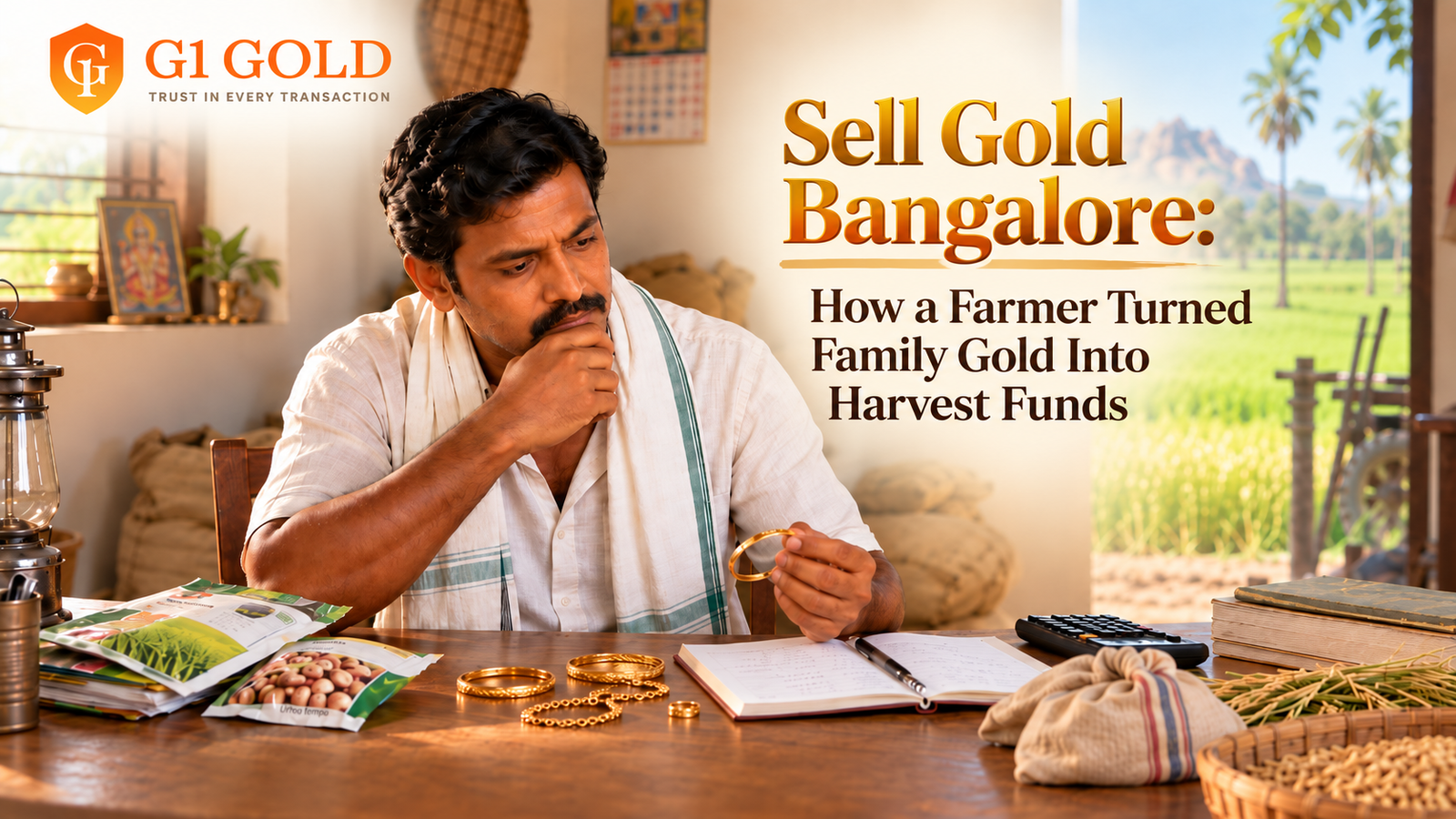
  • Sell Gold Bangalore: How a Farmer Turned Family Gold Into Harvest Funds

    Sell Gold Bangalore: How a Farmer Turned Family Gold Into Harvest Funds

    For many farming families exploring Sell Gold Bangalore options, income does not always arrive exactly when expenses do. Seeds, fertilizer, labour, irrigation repairs, tractor charges and transportation often need to be paid before the next crop begins generating money.

    For one farming family near Bengaluru, this timing created a difficult situation. The next cultivation cycle was approaching, but available cash was limited. Instead of immediately taking another loan, the family considered an asset they already owned: old gold jewellery that had been lying unused for years.

    With G1 Gold, this kind of situation shows how unused jewellery can sometimes be converted into funds for a practical purpose.

    When the Next Harvest Cannot Wait

    Agriculture depends heavily on timing. Delaying land preparation, seeds or irrigation can affect the entire crop cycle.

    The farmer needed money for:

    • Quality seeds
    • Fertilizer and nutrients
    • Tractor expenses
    • Irrigation maintenance
    • Farm labour
    • Fuel and transportation

    The family had already used much of the previous harvest income for household and farming expenses. Taking another loan was possible, but it would create an additional repayment burden.

    That was when they began discussing their unused gold.

    The Gold Had Been Sitting Unused

    Some ornaments had been purchased years ago. Others were old designs that were rarely worn.

    The family did not decide to sell everything.

    Instead, they separated jewellery with strong sentimental importance from the pieces they were comfortable selling. This helped them make a more thoughtful decision.

    Old jewellery can still hold significant financial value, even if its design is no longer preferred.

    In many households, gold is purchased during weddings, festivals or important family occasions and then stored safely for years. While some pieces continue to be worn, others remain untouched because of changing designs, damaged clasps or personal preferences.

    For this family, recognising the difference between emotionally important jewellery and unused jewellery made the decision easier. They were not treating every ornament as disposable. They were simply identifying which assets could be used without affecting the pieces they wanted to preserve for the future.

    Understanding Gold Value Before You Sell Gold Bangalore

    The farmer’s main concern was understanding how much the jewellery was actually worth.

    Before selling, he wanted answers to a few important questions:

    • What is the purity of the gold?
    • What is the actual gold weight?
    • Which gold rate is being applied?
    • Are stones or other materials excluded?
    • Are there any deductions?
    • How is the final amount calculated?

    These details matter because jewellery value depends on more than appearance.

    A heavy-looking ornament may not always contain the same amount of pure gold as another piece of similar size. Design elements, stones and non-gold materials can influence total weight. This is why understanding the valuation process helps customers compare offers more accurately.

    What Determines the Value When You Sell Gold Bangalore?

    Gold Purity

    Different ornaments contain different levels of gold purity. Testing helps determine the actual purity before calculating the value.

    Net Gold Weight

    Jewellery may include stones, beads, hooks or other materials. The net gold weight is generally more important than the total ornament weight.

    Current Gold Rate

    Gold prices change regularly. The rate being applied on the day of valuation can influence the final amount.

    Deductions

    If deductions apply, customers should understand why they are being made before agreeing to the sale.

    He Compared the Process, Not Just the Price

    The farmer did not simply accept the first number offered.

    He asked practical questions:

    • Is the jewellery tested openly?
    • Can I see the weight?
    • Is the gold rate clearly explained?
    • How is purity calculated?
    • Are deductions mentioned beforehand?
    • What will be the final payable amount?

    These questions helped him understand the process before deciding.

    This approach also made it easier to avoid confusion between an advertised rate and the actual amount payable for a specific ornament. The farmer focused on the complete calculation rather than one attractive number.

    Turning Family Gold Into Harvest Funds

    Once the jewellery was evaluated, the family knew the actual amount they could receive.

    They decided to sell only the selected unused pieces.

    The money was then divided according to agricultural needs. Part of it was used for seeds and fertilizer. Another portion covered labour and tractor expenses. Some amount was reserved for transportation and unexpected farm costs.

    The family was not simply selling gold for cash.

    They were converting an unused asset into working capital for their next harvest.

    For them, the value of the transaction became visible in practical ways. The jewellery helped prepare the soil, purchase agricultural inputs and keep essential work moving without waiting for another source of funds.

    Why Selling Unused Gold Can Be Considered

    Every family’s situation is different, and selling gold should always be a personal decision.

    People may consider selling unused jewellery for purposes such as:

    • Agricultural expenses
    • Education fees
    • Medical or emergency needs
    • Small business investment
    • Important financial obligations
    • Converting broken or unwanted jewellery into usable funds

    Jewellery with strong emotional value can always be kept separately.

    The important part is to decide the purpose before selling. When the money has a clear use, such as crop investment, education or business requirements, the decision can be evaluated more practically.

    Why Transparency Matters When You Sell Gold Bangalore

    Anyone planning to sell gold in Bangalore should understand the valuation before making a final decision.

    At a professional gold-buying company such as G1 Gold, customers can ask about purity testing, weight, gold rate and valuation before deciding whether to proceed.

    A clear calculation usually considers:

    Gold Purity + Net Gold Weight + Applicable Gold Rate – Explained Deductions = Final Value

    Understanding these elements makes it easier to compare offers and make an informed decision.

    Customers should also avoid feeling pressured to complete a transaction before understanding the numbers. Asking questions about weight, testing and deductions is a normal part of making a careful financial decision.

    What This Farmer’s Sell Gold Bangalore Story Shows

    The important part of this story is not simply that a farmer sold jewellery.

    The family identified a financial requirement, reviewed their available options and used an existing asset for a specific purpose.

    They kept emotionally important jewellery, evaluated only the unused pieces and directed the money toward farming expenses.

    For someone researching Sell Gold Bangalore, this example shows that old jewellery can sometimes become practical financial support when used thoughtfully.

    What once remained unused in a cupboard became seeds, labour, fertilizer and preparation for the next harvest.

    In that sense, the jewellery did not simply leave the family. Its value was redirected into something productive, helping support the next stage of their livelihood.

    Frequently Asked Questions

    1. Can I sell old family gold in Bangalore?

    Yes. Old, damaged or unused gold jewellery can usually be evaluated and sold, subject to verification and documentation requirements.

    2. How is gold jewellery value calculated?

    The value mainly depends on gold purity, net gold weight and the applicable gold rate. Any deductions should also be clearly explained.

    3. Should I check the gold rate before selling?

    Yes. Checking the current gold rate gives you a useful reference, although purity and net weight also affect the final value.

    4. Do I need to sell all my jewellery?

    No. You can select only the jewellery you are comfortable selling and keep pieces that have sentimental importance.

    5. What should I check before accepting an offer?

    Ask about purity testing, net gold weight, the gold rate being applied, deductions and the final payable amount before confirming the transaction.
     

  • Sell Gold in Yelahanka: How to Compare Offers Before Making a Decision

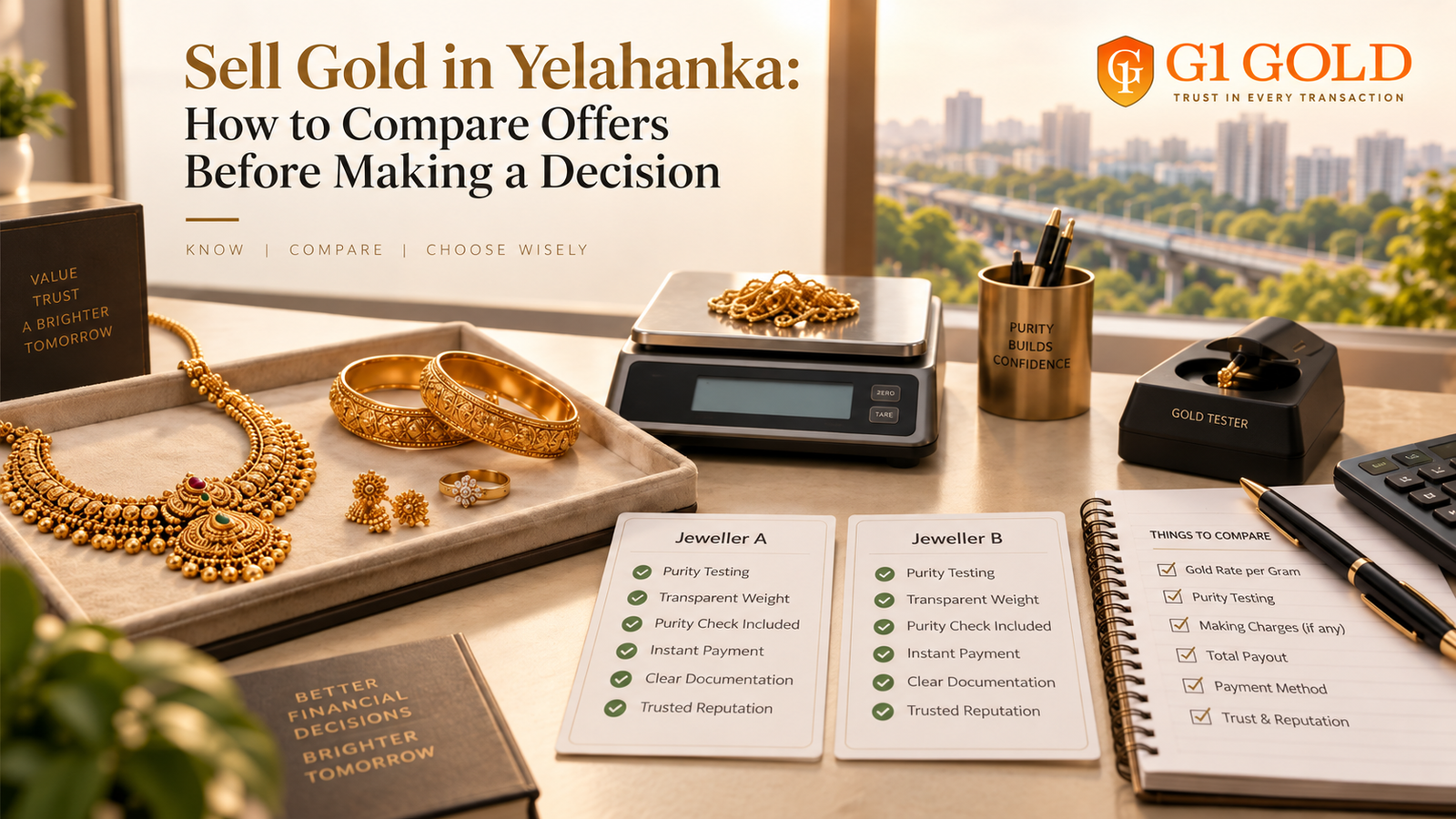
    Sell Gold in Yelahanka: How to Compare Offers Before Making a Decision

    Sell Gold in Yelahanka can be a practical option when you have old, unused, broken, or unwanted jewellery and want to convert it into money. Choosing the right place matters, and your decision should not be based only on the first price you hear.

    Comparing offers can help you understand whether the valuation is clear and reasonable. You should know how your jewellery is tested, what weight is considered, which rate is applied, and whether any deductions are made.

    Why Comparing Gold Offers in Yelahanka Matters

    Gold has a market-linked value, but jewellery is valued using more than the daily rate. The final amount may depend on purity, net weight, non-gold materials, deductions, and the valuation method.

    This is why two buyers can provide different amounts for the same jewellery. Instead of asking only, “What price will you give me?”, ask how the final amount was calculated.

    What Should You Compare Before You Sell Gold in Yelahanka?

    1. Gold Purity

    Purity has a direct impact on jewellery value. A piece marked 22K may still be tested before the final valuation, especially if it is old, repaired, soldered, or contains mixed components.

    Ask the buyer to explain the purity result. You should know the karat or purity percentage identified during testing and how it affects the valuation.

    2. Net Gold Weight

    The total weight of jewellery may include stones, beads, thread, enamel, springs, or other materials. These are not always considered as gold during valuation.

    Ask the buyer to show the gross weight, any non-gold weight, and the final net gold weight. Even a small difference can affect the final amount.

    3. Gold Rate Applied

    Check the approximate gold rate before visiting a buyer. Remember that the rate for 24K gold is different from 22K, 18K, or lower purity jewellery.

    Ask which rate is being used and whether it is based on the current market rate. This gives you a better reference when comparing quotations.

    4. Deductions

    Deductions can change the final payout. Some valuations may include deductions for stones, impurities, testing, melting, or other processing factors.

    Before agreeing to sell, ask:

    • Are there any deductions?
    • What is each deduction for?
    • How much is being deducted?
    • What amount will I receive after deductions?

    A clear quotation should make these figures easy to understand.

    Do Not Compare Advertised Rates Alone

    A high advertised rate can attract attention, but it does not always mean you will receive the highest amount. One buyer may promote a high rate but apply more deductions, while another may provide a better final payout.

    The better question to ask is:

    “How much will I actually receive after purity, weight, and deductions are considered?”

    The final payable amount is more useful than the promotional rate when comparing offers.

    How to Compare Two Gold Offers Properly

    When you receive quotations from two buyers, compare the same details side by side:

    • Tested purity
    • Net gold weight
    • Rate applied
    • Deductions
    • Final payable amount
    • Payment method
    • Transparency of the process

    The purpose is to understand exactly what you are agreeing to.

    Step-by-Step Process Before You Sell Gold in Yelahanka

    1.Check the Current Gold Rate

    Before visiting a buyer, check the approximate market rate. This gives you basic knowledge before the valuation starts.

    2.Ask for Purity Testing

    Purity should be tested and explained clearly. Ask what result was found and how it affects the price.

    3.Check the Weight

    Watch the weighing process. If your jewellery contains stones or other materials, ask how the net gold weight is calculated.

    4.Review the Valuation

    Ask the buyer to explain how purity, weight, and the applicable gold rate are used to calculate the value.

    5.Check Deductions

    Confirm whether any amount is being deducted and why.

    6.Confirm the Final Amount

    Do not make a decision until you know the exact amount you will receive.

    7.Approve or Decline

    A valuation does not mean you must sell. You should be free to accept, compare another quotation, or decide not to proceed.

    At a professional gold buying company such as G1 Gold, customers can ask questions about purity, weight, valuation, and payment before making their decision.

    Questions to Ask Before Selling

    A few direct questions can make the comparison process easier.

    Ask the buyer:

    • What purity did my gold test at?
    • What is the net gold weight?
    • Which gold rate are you applying?
    • Are there any deductions?
    • What is the final payable amount?
    • How will payment be made?
    • Will I receive transaction proof?

    Clear answers make it easier to compare one offer with another.

    Documents You May Need When Selling Gold in Yelahanka

    Gold buyers may ask for valid identification before completing a transaction. Depending on the company, this may include Aadhaar, PAN, bank details, address proof, or a purchase bill if available.

    Check the required documents before visiting to avoid unnecessary delays during the transaction.

    What Warning Signs Should You Watch For?

    Be careful if the valuation feels unclear or rushed.

    Warning signs may include:

    • Purity testing is not explained
    • Weight is not shown clearly
    • The gold rate changes without explanation
    • New deductions appear at the final stage
    • You are pressured to sell immediately
    • Payment terms are unclear

    Selling gold should be your decision. You should understand the offer before agreeing.

    Is the Highest Offer Always the Best?

    Not necessarily. A good offer should combine competitive value with a transparent process.

    You should clearly understand purity, net weight, the applied rate, deductions, and final amount. If you cannot understand where the quote came from, a higher number alone should not decide the sale.

    Transparency can be especially important when two quotations appear similar. Knowing exactly how your gold was valued helps you make a more confident comparison.

    Simple Checklist Before Making Your Decision

    Before you sell gold in Yelahanka, check these points:

    • Check the approximate current gold rate
    • Understand the purity result
    • Confirm the net gold weight
    • Ask which rate is being applied
    • Understand every deduction
    • Compare the final payable amount
    • Confirm the payment method
    • Carry required documents
    • Ask questions if something is unclear
    • Do not sell under pressure

    Following this checklist helps you focus on the actual value you will receive rather than only advertisements or verbal promises.

    Why Transparency Matters When Selling Gold

    Gold jewellery often carries both financial and personal value. That is why the selling process should never feel confusing.

    You should be able to see how your gold is tested, understand the weight being considered, know the rate being used, and receive a clear explanation of the final value.

    When these details are visible, comparing offers becomes easier.

    It also reduces the chance of making a decision based only on promotional claims.

    A transparent gold buyer should give you enough information to decide whether the offer is right for you without creating unnecessary pressure.

    Take Time Before Making the Final Decision

    There is no need to accept the first quotation immediately.

    If something is unclear, ask the buyer to explain it. If you are still unsure, compare another quotation.

    Even comparing two offers can help you identify differences in:

    • Purity assessment
    • Gold weight
    • Rate calculation
    • Deductions
    • Final payout

    Taking a few additional minutes before selling can give you much better clarity about the value of your jewellery.

    Conclusion

    If you are planning to sell gold in Yelahanka, take time to compare offers before making your final decision. Do not choose a buyer only because of a high advertised gold rate or a quick verbal quotation.

    Look at the complete valuation. Check purity, net gold weight, the rate applied, deductions, and the amount you will actually receive. Also consider whether the process is transparent and whether your questions are answered clearly.

    G1 Gold follows a customer-focused approach where customers can understand the important valuation details before choosing whether to proceed.

    A careful comparison can help you make a more informed decision and choose an offer you fully understand.

    Frequently Asked Questions

    1. Should I compare offers before sell gold in Yelahanka?

    Yes. Comparing offers can help you understand differences in purity, net weight, gold rate, deductions, and final payout before making a decision.

    2. Why do gold buyers give different prices for the same jewellery?

    The amount can vary depending on purity results, net gold weight, the rate used for valuation, and deductions applied by each buyer.

    3. What Should I Check First When Comparing Offers to Sell Gold in Yelahanka?

    Start with tested purity, net gold weight, current gold rate, deductions, and final payable amount. These factors provide a clearer comparison.

    4. Do I have to sell after getting my gold valued?

    No. You can review the valuation, compare another offer, or decide not to proceed if you are not comfortable with the quotation.

    5. Can old or broken jewellery be sold?

    Yes. Old, damaged, broken, or unused gold jewellery can generally be evaluated based on its actual purity and net gold content.


  • How to Sell Gold in Bangalore: Gold Rates, Purity Testing & Valuation

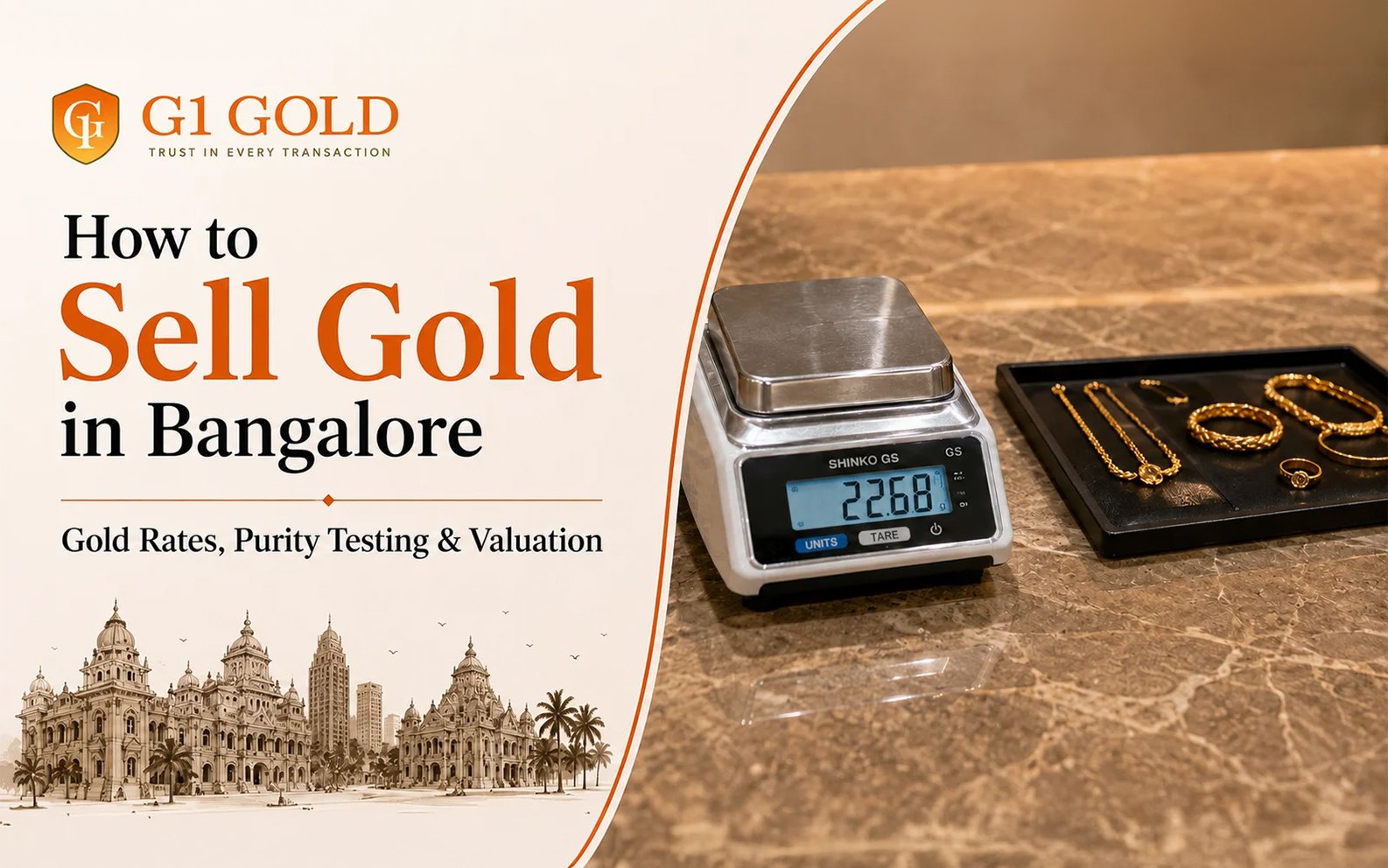
    How to Sell Gold in Bangalore: Gold Rates, Purity Testing & Valuation

    Selling gold is not simply a matter of checking the day’s gold rate and handing over your jewellery. If you plan to sell gold in Bangalore, the amount you finally receive depends on several factors, including the purity of the gold, its net gold weight, the applicable market rate, and the valuation method used by the buyer.

    For people in Bangalore, understanding these steps before visiting a gold buyer such as G1 Gold can make the process much easier. Whether you have old jewellery, broken ornaments, coins, chains, rings, or gold that has been sitting unused for years, knowing how the valuation works helps you make an informed decision.

    This guide from G1 Gold explains how to sell gold in Bangalore, what happens during purity testing, how gold rates affect your final value, which documents may be required, and what you should check before accepting an offer.

    Why People Sell Gold in Bangalore

    Gold often stays in homes for years without being used. Old designs may no longer suit you, damaged jewellery may remain in a locker, or inherited pieces may not have any practical use. If you are planning to sell gold in Bangalore, these unused gold items can be evaluated based on their purity, weight, and current market value.

    Selling can turn that unused asset into money when you have a specific financial requirement.

    Common reasons include:

    • Selling old or damaged jewellery that is no longer being worn
    • Converting inherited gold into usable funds
    • Selling broken chains, rings, bangles, or other ornaments
    • Releasing value from gold that has been kept unused
    • Funding personal, household, or business requirements
    • Choosing to sell when the prevailing gold rate is attractive

    The important point is that the value of old jewellery is primarily connected to the gold content and purity, rather than how fashionable or expensive the original design was.

    Step 1: Check the Current Gold Rate

    The first thing to understand is the current gold rate.

    Gold prices can change frequently because they are influenced by international gold prices, currency movements, market conditions, and domestic factors. Therefore, the rate you see today may not be the same as yesterday’s or tomorrow’s rate.

    Before selling gold in Bangalore, check the applicable rate for the purity of your gold.

    For example:

    • 24K gold represents very high purity and is commonly associated with investment-grade gold.
    • 22K gold contains a lower proportion of pure gold than 24K.
    • 18K gold contains a higher proportion of other metals and therefore has a different gold value.
    • Other purities are valued according to their actual gold content.

    Do not compare only the headline 24K rate with the amount offered for jewellery. Your jewellery may have a different purity, and the final calculation needs to account for that.

    Step 2: Have Your Gold Weighed

    Once you approach a gold buyer, the jewellery is weighed to determine its total weight.

    This is an important stage because the final valuation is linked to the quantity of gold being evaluated.

    However, the total weight of a jewellery item does not always represent the weight of pure gold.

    For example, jewellery may contain:

    • Precious or semi-precious stones
    • Beads
    • Lac or other filling materials
    • Clasps and non-gold components
    • Other metals used to create the ornament

    This is why total jewellery weight and net gold weight should not automatically be treated as the same figure.

    A clear valuation process should explain what is being weighed and how the final gold weight is determined.

    Step 3: Gold Purity Testing

    Purity is one of the most important parts of gold valuation.

    A piece may be described as 22K, 18K, or another purity based on its hallmark, previous purchase information, or the owner’s understanding. However, the actual purity can be tested before the final value is calculated.

    BIS explains that hallmarking is the official determination and recording of the proportion of precious metal in an article. Consumers can also have jewellery or samples tested through BIS-recognized Assaying & Hallmarking Centres.

    Depending on the buyer and the type of gold being evaluated, testing methods may include non-destructive analysis such as XRF testing.

    A proper testing process should make the result understandable to you.

    You should be able to ask:

    • What purity was detected?
    • What testing method was used?
    • What is the net gold weight?
    • Which gold rate is being applied?
    • How was the final amount calculated?

    These questions are particularly useful when selling older jewellery whose purity may not be immediately clear.

    Step 4: Understand How Your Gold Is Valued

    After weighing and purity testing, the buyer can calculate the gold value.

    A simplified way to understand the calculation is:

    Gold value = Net gold weight × applicable gold rate × purity adjustment

    The actual calculation may vary according to the buyer’s valuation policy and the type of gold being sold.

    For jewellery containing stones or non-gold components, the relevant gold weight needs to be separated from the total article weight.

    This is why two people selling jewellery with the same total weight may receive different amounts.

    The final value can be affected by:

    • Gold purity
    • Net gold weight
    • Applicable gold rate
    • Type of gold item
    • Presence of stones or other materials
    • Buyer’s valuation terms
    • Applicable deductions, if any

    The key is not simply to ask, “What is today’s gold rate?”

    Instead, ask, “How did you arrive at my final value?”

    That question gives you a much clearer understanding of the transaction.

    Step 5: Review the Final Calculation Before Selling

    Before accepting an offer, take a moment to review the calculation.

    A transparent valuation should allow you to understand the major figures involved rather than presenting only one final amount.

    Check:

    • Gross weight
    • Deducted non-gold weight, where applicable
    • Net gold weight
    • Purity
    • Rate applied
    • Valuation amount
    • Any applicable deductions
    • Final payable amount

    If something is unclear, ask for an explanation before completing the transaction.

    There is no need to rely solely on the original purchase price of your jewellery. Jewellery bills often include costs such as making charges and design-related expenses that do not necessarily form part of the resale value of the gold itself.

    Documents You May Need

    The documents required can vary depending on the buyer and transaction.

    It is sensible to carry:

    • A valid identity document
    • Bank details if payment is being made through a bank transfer
    • Original purchase invoice, if available
    • Any documentation related to pledged or inherited gold, where applicable

    Having the original bill can sometimes help establish background information about the jewellery, although the valuation still depends on the gold being assessed.

    For hallmarked jewellery, BIS also recommends maintaining authentic bills or invoices because they can be useful for dispute resolution and related purposes.

    What to Look for When Selling Gold in Bangalore

    Choosing where to sell is just as important as understanding the gold rate.

    Look for a process where the important stages are clearly explained.

    A good gold-selling process should include:

    • Clear weighing of the jewellery
    • Purity testing that can be explained to the customer
    • A clearly stated rate used for valuation
    • Separation of non-gold materials where applicable
    • An understandable calculation
    • Clear communication about deductions
    • Proper documentation
    • Secure handling of the jewellery
    • Payment through a clearly explained method

    You should never feel pressured to accept an amount you do not understand.

    If the buyer cannot explain how the final amount was calculated, ask for clarification before proceeding.

    Can You Sell Broken or Old Gold?

    Yes. Gold does not have to be in perfect condition to have metal value.

    Broken chains, damaged bangles, single earrings, outdated rings, and other unused ornaments may still contain recoverable gold.

    The design may no longer have much relevance to the transaction, but the underlying gold can still be assessed.

    This is particularly useful for people who have jewellery sitting unused simply because it is damaged or no longer wearable.

    What About Gold With Stones?

    Jewellery containing stones requires additional care during valuation.

    The total weight of the ornament is not necessarily the same as the weight of the gold.

    A buyer may need to account for:

    • Stone weight
    • Other non-gold materials
    • Gold purity
    • Actual gold content

    Ask how these components are being considered before agreeing to the final amount.

    A transparent explanation can help avoid confusion about why the amount offered differs from what you expected based on the jewellery’s total weight.

    Final Checklist Before Selling Gold

    Before completing the sale, keep these points in mind:

    • Check the current gold rate.
    • Know the approximate purity of your jewellery.
    • Check hallmark and HUID details if available.
    • Ask for the jewellery to be weighed clearly.
    • Understand the difference between gross and net gold weight.
    • Ask how purity is being tested.
    • Ask which rate is being applied.
    • Request a clear explanation of the valuation.
    • Understand every applicable deduction.
    • Review the final amount before confirming the transaction.

    • Keep the relevant transaction documentation.

    Selling gold becomes much simpler when you understand what determines its value. The goal is not merely to find a buyer, but to understand the complete journey from gold testing to final payment.

    For anyone looking to sell gold in Bangalore, taking a few minutes to understand the rate, purity, weight, and valuation can make the entire experience more straightforward and informed.

    Frequently Asked Questions

    1. How is gold valued when I sell jewellery in Bangalore?

    Gold is generally valued based on factors such as purity, net gold weight, and the applicable gold rate. Jewellery containing stones or other non-gold components may require additional weight adjustments before the gold value is calculated.

    2. Do I need a hallmark to sell old gold?

    No. Old hallmarked and unhallmarked jewellery can be sold. The gold can be assessed through an appropriate purity testing and valuation process. BIS confirms that consumers can sell both old unhallmarked and hallmarked jewellery.

    3. Can I sell broken gold jewellery?

    Yes. Broken chains, damaged rings, single earrings, old bangles, and similar items can still have value based on their gold content. The condition of the design does not necessarily determine the underlying metal value.

    4. How does purity affect the amount I receive?

    Purity indicates the proportion of gold present in the article. Higher-purity gold contains more gold by weight, so purity is an important factor in calculating the value of jewellery.

    5. What is HUID in gold jewellery?

    HUID stands for Hallmark Unique Identification number. It is a six-digit alphanumeric number associated with hallmarked gold jewellery. BIS states that consumers can use the BIS Care app’s Verify HUID feature to check it.

    6. Does the original jewellery purchase price determine its resale value?

    Not necessarily. The original purchase price may include making charges, design costs, and other components. When selling gold, the valuation generally focuses on the gold content, purity, weight, and applicable rate rather than simply returning the original purchase price.

    7. What should I ask before selling my gold?

    Ask for the purity result, gross and net weight, applicable gold rate, calculation method, and details of any deductions. Understanding these figures before confirming the sale makes it easier to evaluate the offer and avoid unnecessary confusion.

  • KYC Documents Required to Sell Your Gold in Bangalore

    KYC Documents Required to Sell Your Gold in Bangalore

    Introduction 

    If you are planning to Sell Gold in Bangalore, one of the first questions that comes to mind is simple: “What documents should I carry?” Many people visit gold buyers with old jewellery, broken chains, inherited gold, coins or unused ornaments, but they are unsure whether Aadhaar, PAN, old bill or address proof is required. 

    KYC is not just a formality. It protects both the customer and the gold buyer. It helps confirm the identity of the person selling the gold, supports transparent payment and creates a proper transaction record. At G1 Gold, the process is kept simple, clear and customer friendly so that you do not feel confused at the counter. 

    This guide explains the KYC documents required to sell gold in Bangalore, why they are needed, when PAN becomes important, what to do if you do not have the original purchase bill and how to prepare before visiting a trusted gold buyer. 

    Why KYC Is Needed When You Sell Gold in Bangalore ?

    Gold is a high value asset. Even a small piece of jewellery can have significant resale value because the final amount depends on purity, weight and the live gold rate. This is why proper verification is important. 

    KYC helps in: 

    • Confirming the seller’s identity 
    • Avoiding misuse of stolen or disputed gold 
    • Creating a safe transaction record 
    • Supporting transparent payment 
    • Helping the buyer follow compliance practices 
    • Protecting genuine customers from future confusion 

    When you Sell Gold in Bangalore, especially in busy areas where many gold buying shops operate, proper KYC gives you confidence that the transaction is being handled professionally. 

    Main KYC Documents Required to Sell Gold 

    The exact document requirement may depend on the gold value, payment mode and buyer policy. However, most professional gold buyers in Bangalore will ask for a valid identity proof and sometimes additional supporting details. 

    Document Type Commonly Accepted Documents  Why It Is Needed
    Photo Identity Proof  Aadhaar card, PAN card, voter ID, passport, driving licence  To verify the person selling the gold 
    Address Proof  Aadhaar card, voter ID, passport, driving licence, utility bill if required  To confirm residence details 
    PAN Card  Usually required for higher value transactions  To support tax and compliance records 
    Bank Details  Bank passbook, cancelled cheque, UPI linked bank account or account details  For safe digital payment 
    Old Purchase Bill  Jewellery bill or invoice if available  Helps support ownership, but may not always be compulsory 
    Authorization Letter  Written consent from owner if selling family gold  Needed if the gold belongs to a parent, spouse or immediate family member

    Is Aadhaar Enough to Sell Gold? 

    Aadhaar is commonly used as an identity and address document in India. If your Aadhaar details are clear and match your name, it can usually support the KYC process. However, Aadhaar alone may not be enough in every case. 

    For example, if the gold value is high, the buyer may also ask for PAN. If the address is unclear or if the payment needs to be made through bank transfer, bank details may also be required. 

    At G1 Gold, customers are guided clearly before the valuation begins, so they know which document is needed and why. 

    When Is PAN Card Required? 

    PAN is important for high value transactions. If the transaction value crosses the applicable limit, the gold buyer may ask for PAN details to keep the transaction compliant and properly recorded. 

    Carrying PAN is always a smart choice when you are going to sell gold in Bangalore because gold values can change quickly. A few grams of 22K or 24K gold may cross a higher transaction value depending on the live market rate. 

    Quick Document Checklist Before Visiting 

    Before you leave home, keep these items ready: 

    • Aadhaar card or any valid government photo ID 
    • PAN card, especially for higher value gold 
    • Bank account details for secure payment 
    • Old gold bill if available 
    • Mobile number linked to your bank or UPI 
    • Written consent if the gold belongs to a family member 
    • Your own government ID if you are selling on behalf of someone else 

    Do You Need the Original Gold Bill? 

    Many people hesitate to sell old jewellery because they do not have the original purchase bill. This is common in Bangalore households because gold is often gifted during weddings, festivals, naming ceremonies or family occasions. 

    The original bill is useful, but it is not always compulsory. A bill may help prove purchase history and may make the process easier. However, old, gifted, inherited or broken gold can still be evaluated if you provide proper KYC and ownership details. 

    At G1 Gold, the value of your gold is mainly calculated using: 

    • Gold purity 
    • Net gold weight 
    • Current gold rate 
    • Deductions, if any, explained clearly 
    • Final payable amount after valuation 

    The bill may support the process, but the actual resale value depends on the gold itself. 

    Can You Sell Gold That Belongs to Your Parents or Spouse? 

    Yes, in many cases you can sell family gold, but the process must be handled carefully. If the gold belongs to your parent, spouse or immediate family member, the buyer may ask for written consent from the actual owner. 

    You may need to carry: 

    Situation  Documents Required 
    Selling your own gold  Your ID proof, PAN if needed, bank details 
    Selling parent’s gold  Your ID proof, parent’s ID proof, consent letter 
    Selling spouse’s gold  Your ID proof, spouse’s ID proof, consent letter 
    Selling inherited gold  Your ID proof, supporting family or ownership declaration if required 
    Selling gold without bill  Your ID proof, PAN if needed, ownership declaration if asked 

    This protects both sides. It ensures the gold is being sold with permission and avoids future disputes. 

    Secure Payment KYC When You Sell Gold

    When you sell gold in Bangalore, KYC is not only for identity verification. It also helps keep the payment safe, clear and traceable. A trusted gold buyer will check your ID, explain the final gold value and make the payment through a proper method.

    Common payment options include:

    • Bank transfer
    • UPI payment
    • Cheque, if required
    • Cash only within legal limits

    For high-value gold selling, bank transfer or UPI is usually safer because you get clear payment proof. Always collect a bill, receipt or transaction confirmation after receiving the payment. This protects you from payment disputes and keeps the gold selling process transparent.

    Why Bangalore Customers Should Be Extra Careful ?

    Bangalore has many gold buyers across areas like Malleshwaram, Jayanagar, Rajajinagar, Vijayanagar, Banashankari, Indiranagar, Whitefield, Yelahanka and surrounding locations. Since customers have many options, they should not select a buyer only because of a high first quote. 

    Before you sell gold in Bangalore, check whether the buyer: 

    • Tests gold in front of you 
    • Explains purity clearly 
    • Shares the live gold rate 
    • Separates stone weight from gold weight 
    • Provides a proper valuation breakup 
    • Asks for valid KYC documents 
    • Gives payment proof 
    • Does not pressure you to sell immediately 

    G1 Gold focuses on transparent valuation and clear documentation so customers understand the process before accepting the final offer. 

    Step by Step Process to Sell Gold at G1 Gold 

    Here is how the process usually works: 

    Steps What Happens   Customer Benefits
    Step 1  Customer brings gold and KYC documents    Smooth verification
    Step 2  Gold is checked for weight and purity   Clear valuation
    Step 3  Live gold rate is considered   Fair market based price
    Step 4  Deductions, if any, are explained   No hidden confusion
    Step 5  Customer approves the final amount   Full control before selling
    Step 6 Payment is made securely  Instant settlement record

    Common Mistakes to Avoid 

    Many customers lose time or face confusion because they come unprepared. Avoid these mistakes before visiting a gold buyer: 

    • Carrying only jewellery without ID proof 
    • Forgetting PAN for high value gold 
    • Not checking the live gold rate 
    • Accepting a verbal quote without calculation 
    • Selling family gold without owner consent 
    • Ignoring stone weight deductions 
    • Taking payment without receipt 
    • Choosing a buyer only based on advertisement claims 

    A few minutes of preparation can help you get a smoother and safer selling experience. 

    Conclusion 

    KYC documents are an important part of selling gold safely. If you want to Sell Gold in Bangalore, carry a valid photo ID, PAN card, bank details and any old bill if available. If you are selling gold that belongs to a family member, keep written consent and the owner’s ID proof ready. 

    At G1 Gold, the goal is to make the gold selling process simple, transparent and respectful. Whether your jewellery is old, broken, unused, inherited or without a bill, proper KYC helps complete the transaction safely and gives you peace of mind. 

    Frequently Asked Questions

    1. What KYC documents are required to sell gold in Bangalore?

    You should carry a valid government photo ID such as Aadhaar, voter ID, passport or driving licence. PAN may be required for higher value transactions. Bank details are also useful for secure payment. 

    2. Can I sell gold without the original bill?

    Yes, in many cases you can sell old gold without the original bill. The buyer may ask for proper KYC and ownership confirmation. The final value depends on purity, weight and live gold rate. 

    3. Is PAN card compulsory to sell gold?

    PAN is important for high value transactions and may be required based on the transaction amount and compliance rules. It is better to carry PAN when you visit a gold buyer. 

    4. Can I sell my mother’s or spouse’s gold?

    Yes, but you may need written consent from the owner along with their ID proof and your ID proof. This helps avoid ownership disputes and keeps the process transparent. 

    5. How does G1 Gold calculate the value of my gold?

    G1 Gold checks the purity, net weight and current gold rate before giving the final value. Any deduction, such as stone weight or impurity adjustment, is explained clearly before payment.