

Tag: Gold Buyers

  • Sell Gold Bangalore: How a Farmer Turned Family Gold Into Harvest Funds

    Sell Gold Bangalore: How a Farmer Turned Family Gold Into Harvest Funds

    For many farming families exploring Sell Gold Bangalore options, income does not always arrive exactly when expenses do. Seeds, fertilizer, labour, irrigation repairs, tractor charges and transportation often need to be paid before the next crop begins generating money.

    For one farming family near Bengaluru, this timing created a difficult situation. The next cultivation cycle was approaching, but available cash was limited. Instead of immediately taking another loan, the family considered an asset they already owned: old gold jewellery that had been lying unused for years.

    With G1 Gold, this kind of situation shows how unused jewellery can sometimes be converted into funds for a practical purpose.

    When the Next Harvest Cannot Wait

    Agriculture depends heavily on timing. Delaying land preparation, seeds or irrigation can affect the entire crop cycle.

    The farmer needed money for:

    • Quality seeds
    • Fertilizer and nutrients
    • Tractor expenses
    • Irrigation maintenance
    • Farm labour
    • Fuel and transportation

    The family had already used much of the previous harvest income for household and farming expenses. Taking another loan was possible, but it would create an additional repayment burden.

    That was when they began discussing their unused gold.

    The Gold Had Been Sitting Unused

    Some ornaments had been purchased years ago. Others were old designs that were rarely worn.

    The family did not decide to sell everything.

    Instead, they separated jewellery with strong sentimental importance from the pieces they were comfortable selling. This helped them make a more thoughtful decision.

    Old jewellery can still hold significant financial value, even if its design is no longer preferred.

    In many households, gold is purchased during weddings, festivals or important family occasions and then stored safely for years. While some pieces continue to be worn, others remain untouched because of changing designs, damaged clasps or personal preferences.

    For this family, recognising the difference between emotionally important jewellery and unused jewellery made the decision easier. They were not treating every ornament as disposable. They were simply identifying which assets could be used without affecting the pieces they wanted to preserve for the future.

    Understanding Gold Value Before You Sell Gold Bangalore

    The farmer’s main concern was understanding how much the jewellery was actually worth.

    Before selling, he wanted answers to a few important questions:

    • What is the purity of the gold?
    • What is the actual gold weight?
    • Which gold rate is being applied?
    • Are stones or other materials excluded?
    • Are there any deductions?
    • How is the final amount calculated?

    These details matter because jewellery value depends on more than appearance.

    A heavy-looking ornament may not always contain the same amount of pure gold as another piece of similar size. Design elements, stones and non-gold materials can influence total weight. This is why understanding the valuation process helps customers compare offers more accurately.

    What Determines the Value When You Sell Gold Bangalore?

    Gold Purity

    Different ornaments contain different levels of gold purity. Testing helps determine the actual purity before calculating the value.

    Net Gold Weight

    Jewellery may include stones, beads, hooks or other materials. The net gold weight is generally more important than the total ornament weight.

    Current Gold Rate

    Gold prices change regularly. The rate being applied on the day of valuation can influence the final amount.

    Deductions

    If deductions apply, customers should understand why they are being made before agreeing to the sale.

    He Compared the Process, Not Just the Price

    The farmer did not simply accept the first number offered.

    He asked practical questions:

    • Is the jewellery tested openly?
    • Can I see the weight?
    • Is the gold rate clearly explained?
    • How is purity calculated?
    • Are deductions mentioned beforehand?
    • What will be the final payable amount?

    These questions helped him understand the process before deciding.

    This approach also made it easier to avoid confusion between an advertised rate and the actual amount payable for a specific ornament. The farmer focused on the complete calculation rather than one attractive number.

    Turning Family Gold Into Harvest Funds

    Once the jewellery was evaluated, the family knew the actual amount they could receive.

    They decided to sell only the selected unused pieces.

    The money was then divided according to agricultural needs. Part of it was used for seeds and fertilizer. Another portion covered labour and tractor expenses. Some amount was reserved for transportation and unexpected farm costs.

    The family was not simply selling gold for cash.

    They were converting an unused asset into working capital for their next harvest.

    For them, the value of the transaction became visible in practical ways. The jewellery helped prepare the soil, purchase agricultural inputs and keep essential work moving without waiting for another source of funds.

    Why Selling Unused Gold Can Be Considered

    Every family’s situation is different, and selling gold should always be a personal decision.

    People may consider selling unused jewellery for purposes such as:

    • Agricultural expenses
    • Education fees
    • Medical or emergency needs
    • Small business investment
    • Important financial obligations
    • Converting broken or unwanted jewellery into usable funds

    Jewellery with strong emotional value can always be kept separately.

    The important part is to decide the purpose before selling. When the money has a clear use, such as crop investment, education or business requirements, the decision can be evaluated more practically.

    Why Transparency Matters When You Sell Gold Bangalore

    Anyone planning to sell gold in Bangalore should understand the valuation before making a final decision.

    At a professional gold-buying company such as G1 Gold, customers can ask about purity testing, weight, gold rate and valuation before deciding whether to proceed.

    A clear calculation usually considers:

    Gold Purity + Net Gold Weight + Applicable Gold Rate – Explained Deductions = Final Value

    Understanding these elements makes it easier to compare offers and make an informed decision.

    Customers should also avoid feeling pressured to complete a transaction before understanding the numbers. Asking questions about weight, testing and deductions is a normal part of making a careful financial decision.

    What This Farmer’s Sell Gold Bangalore Story Shows

    The important part of this story is not simply that a farmer sold jewellery.

    The family identified a financial requirement, reviewed their available options and used an existing asset for a specific purpose.

    They kept emotionally important jewellery, evaluated only the unused pieces and directed the money toward farming expenses.

    For someone researching Sell Gold Bangalore, this example shows that old jewellery can sometimes become practical financial support when used thoughtfully.

    What once remained unused in a cupboard became seeds, labour, fertilizer and preparation for the next harvest.

    In that sense, the jewellery did not simply leave the family. Its value was redirected into something productive, helping support the next stage of their livelihood.

    Frequently Asked Questions

    1. Can I sell old family gold in Bangalore?

    Yes. Old, damaged or unused gold jewellery can usually be evaluated and sold, subject to verification and documentation requirements.

    2. How is gold jewellery value calculated?

    The value mainly depends on gold purity, net gold weight and the applicable gold rate. Any deductions should also be clearly explained.

    3. Should I check the gold rate before selling?

    Yes. Checking the current gold rate gives you a useful reference, although purity and net weight also affect the final value.

    4. Do I need to sell all my jewellery?

    No. You can select only the jewellery you are comfortable selling and keep pieces that have sentimental importance.

    5. What should I check before accepting an offer?

    Ask about purity testing, net gold weight, the gold rate being applied, deductions and the final payable amount before confirming the transaction.
     

  • Sell Gold in Yelahanka: How to Compare Offers Before Making a Decision

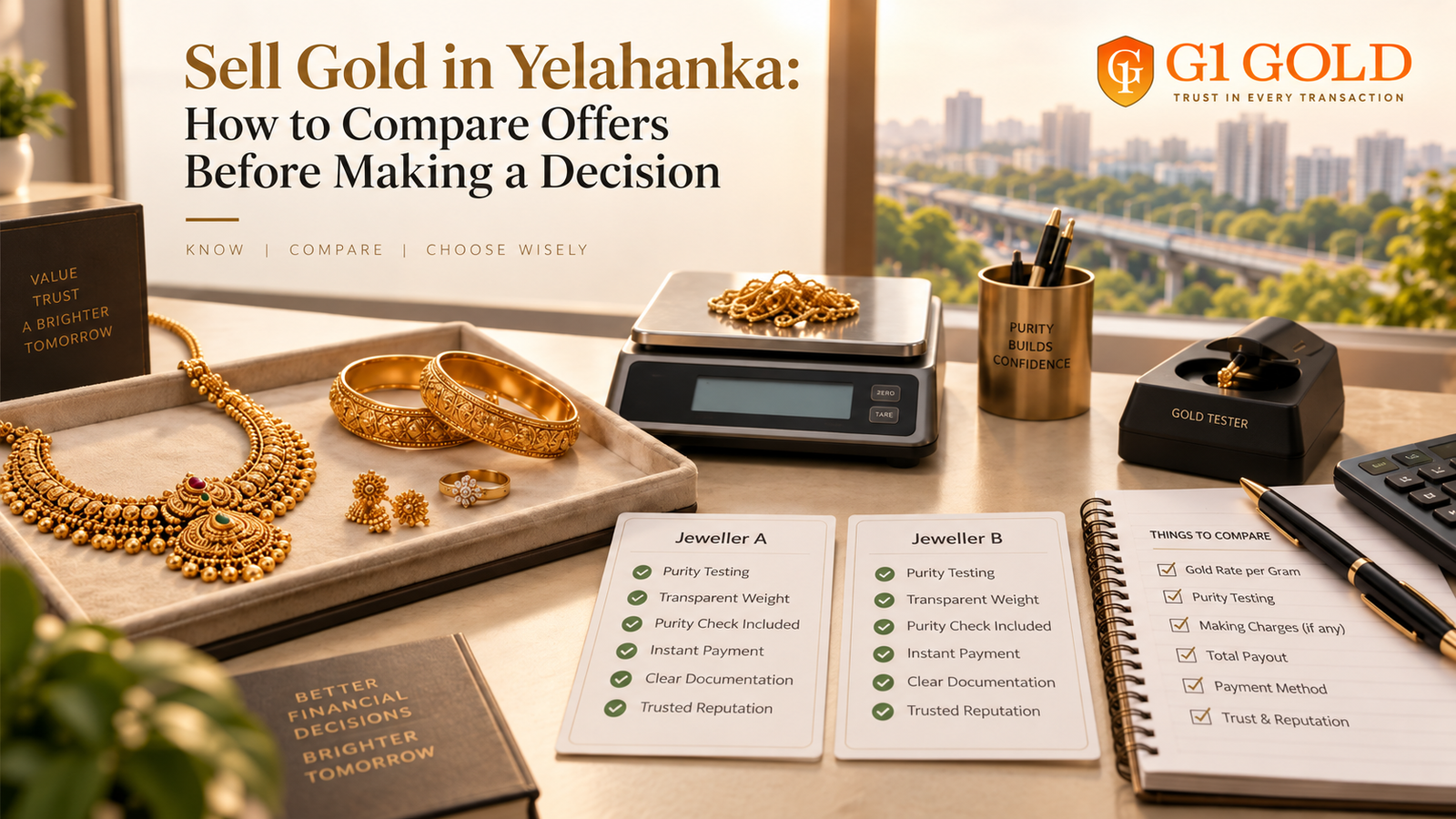
    Sell Gold in Yelahanka: How to Compare Offers Before Making a Decision

    Sell Gold in Yelahanka can be a practical option when you have old, unused, broken, or unwanted jewellery and want to convert it into money. Choosing the right place matters, and your decision should not be based only on the first price you hear.

    Comparing offers can help you understand whether the valuation is clear and reasonable. You should know how your jewellery is tested, what weight is considered, which rate is applied, and whether any deductions are made.

    Why Comparing Gold Offers in Yelahanka Matters

    Gold has a market-linked value, but jewellery is valued using more than the daily rate. The final amount may depend on purity, net weight, non-gold materials, deductions, and the valuation method.

    This is why two buyers can provide different amounts for the same jewellery. Instead of asking only, “What price will you give me?”, ask how the final amount was calculated.

    What Should You Compare Before You Sell Gold in Yelahanka?

    1. Gold Purity

    Purity has a direct impact on jewellery value. A piece marked 22K may still be tested before the final valuation, especially if it is old, repaired, soldered, or contains mixed components.

    Ask the buyer to explain the purity result. You should know the karat or purity percentage identified during testing and how it affects the valuation.

    2. Net Gold Weight

    The total weight of jewellery may include stones, beads, thread, enamel, springs, or other materials. These are not always considered as gold during valuation.

    Ask the buyer to show the gross weight, any non-gold weight, and the final net gold weight. Even a small difference can affect the final amount.

    3. Gold Rate Applied

    Check the approximate gold rate before visiting a buyer. Remember that the rate for 24K gold is different from 22K, 18K, or lower purity jewellery.

    Ask which rate is being used and whether it is based on the current market rate. This gives you a better reference when comparing quotations.

    4. Deductions

    Deductions can change the final payout. Some valuations may include deductions for stones, impurities, testing, melting, or other processing factors.

    Before agreeing to sell, ask:

    • Are there any deductions?
    • What is each deduction for?
    • How much is being deducted?
    • What amount will I receive after deductions?

    A clear quotation should make these figures easy to understand.

    Do Not Compare Advertised Rates Alone

    A high advertised rate can attract attention, but it does not always mean you will receive the highest amount. One buyer may promote a high rate but apply more deductions, while another may provide a better final payout.

    The better question to ask is:

    “How much will I actually receive after purity, weight, and deductions are considered?”

    The final payable amount is more useful than the promotional rate when comparing offers.

    How to Compare Two Gold Offers Properly

    When you receive quotations from two buyers, compare the same details side by side:

    • Tested purity
    • Net gold weight
    • Rate applied
    • Deductions
    • Final payable amount
    • Payment method
    • Transparency of the process

    The purpose is to understand exactly what you are agreeing to.

    Step-by-Step Process Before You Sell Gold in Yelahanka

    1.Check the Current Gold Rate

    Before visiting a buyer, check the approximate market rate. This gives you basic knowledge before the valuation starts.

    2.Ask for Purity Testing

    Purity should be tested and explained clearly. Ask what result was found and how it affects the price.

    3.Check the Weight

    Watch the weighing process. If your jewellery contains stones or other materials, ask how the net gold weight is calculated.

    4.Review the Valuation

    Ask the buyer to explain how purity, weight, and the applicable gold rate are used to calculate the value.

    5.Check Deductions

    Confirm whether any amount is being deducted and why.

    6.Confirm the Final Amount

    Do not make a decision until you know the exact amount you will receive.

    7.Approve or Decline

    A valuation does not mean you must sell. You should be free to accept, compare another quotation, or decide not to proceed.

    At a professional gold buying company such as G1 Gold, customers can ask questions about purity, weight, valuation, and payment before making their decision.

    Questions to Ask Before Selling

    A few direct questions can make the comparison process easier.

    Ask the buyer:

    • What purity did my gold test at?
    • What is the net gold weight?
    • Which gold rate are you applying?
    • Are there any deductions?
    • What is the final payable amount?
    • How will payment be made?
    • Will I receive transaction proof?

    Clear answers make it easier to compare one offer with another.

    Documents You May Need When Selling Gold in Yelahanka

    Gold buyers may ask for valid identification before completing a transaction. Depending on the company, this may include Aadhaar, PAN, bank details, address proof, or a purchase bill if available.

    Check the required documents before visiting to avoid unnecessary delays during the transaction.

    What Warning Signs Should You Watch For?

    Be careful if the valuation feels unclear or rushed.

    Warning signs may include:

    • Purity testing is not explained
    • Weight is not shown clearly
    • The gold rate changes without explanation
    • New deductions appear at the final stage
    • You are pressured to sell immediately
    • Payment terms are unclear

    Selling gold should be your decision. You should understand the offer before agreeing.

    Is the Highest Offer Always the Best?

    Not necessarily. A good offer should combine competitive value with a transparent process.

    You should clearly understand purity, net weight, the applied rate, deductions, and final amount. If you cannot understand where the quote came from, a higher number alone should not decide the sale.

    Transparency can be especially important when two quotations appear similar. Knowing exactly how your gold was valued helps you make a more confident comparison.

    Simple Checklist Before Making Your Decision

    Before you sell gold in Yelahanka, check these points:

    • Check the approximate current gold rate
    • Understand the purity result
    • Confirm the net gold weight
    • Ask which rate is being applied
    • Understand every deduction
    • Compare the final payable amount
    • Confirm the payment method
    • Carry required documents
    • Ask questions if something is unclear
    • Do not sell under pressure

    Following this checklist helps you focus on the actual value you will receive rather than only advertisements or verbal promises.

    Why Transparency Matters When Selling Gold

    Gold jewellery often carries both financial and personal value. That is why the selling process should never feel confusing.

    You should be able to see how your gold is tested, understand the weight being considered, know the rate being used, and receive a clear explanation of the final value.

    When these details are visible, comparing offers becomes easier.

    It also reduces the chance of making a decision based only on promotional claims.

    A transparent gold buyer should give you enough information to decide whether the offer is right for you without creating unnecessary pressure.

    Take Time Before Making the Final Decision

    There is no need to accept the first quotation immediately.

    If something is unclear, ask the buyer to explain it. If you are still unsure, compare another quotation.

    Even comparing two offers can help you identify differences in:

    • Purity assessment
    • Gold weight
    • Rate calculation
    • Deductions
    • Final payout

    Taking a few additional minutes before selling can give you much better clarity about the value of your jewellery.

    Conclusion

    If you are planning to sell gold in Yelahanka, take time to compare offers before making your final decision. Do not choose a buyer only because of a high advertised gold rate or a quick verbal quotation.

    Look at the complete valuation. Check purity, net gold weight, the rate applied, deductions, and the amount you will actually receive. Also consider whether the process is transparent and whether your questions are answered clearly.

    G1 Gold follows a customer-focused approach where customers can understand the important valuation details before choosing whether to proceed.

    A careful comparison can help you make a more informed decision and choose an offer you fully understand.

    Frequently Asked Questions

    1. Should I compare offers before sell gold in Yelahanka?

    Yes. Comparing offers can help you understand differences in purity, net weight, gold rate, deductions, and final payout before making a decision.

    2. Why do gold buyers give different prices for the same jewellery?

    The amount can vary depending on purity results, net gold weight, the rate used for valuation, and deductions applied by each buyer.

    3. What Should I Check First When Comparing Offers to Sell Gold in Yelahanka?

    Start with tested purity, net gold weight, current gold rate, deductions, and final payable amount. These factors provide a clearer comparison.

    4. Do I have to sell after getting my gold valued?

    No. You can review the valuation, compare another offer, or decide not to proceed if you are not comfortable with the quotation.

    5. Can old or broken jewellery be sold?

    Yes. Old, damaged, broken, or unused gold jewellery can generally be evaluated based on its actual purity and net gold content.


  • How to Release Pledged Gold Without Confusion or Last-Minute Pressure

    How to Release Pledged Gold Without Confusion or Last-Minute Pressure

    Pledging gold is common during urgent financial needs. Many people use their jewellery to manage medical expenses, business needs, school fees, family functions, or sudden cash shortages. At that moment, pledging gold feels like a practical option because it gives quick money without selling the ornament. Later, when the loan amount, interest, or due date becomes difficult to manage, finding the right way to Release Pledged Gold becomes important.

    But the real pressure starts later, when the repayment date comes closer. Interest keeps increasing, reminders begin, and many families start worrying about whether they can release the pledged gold on time. Some people delay because they do not know the process. Some feel confused about the amount to be paid. Others fear losing jewellery that has emotional value.

    The good news is that releasing pledged gold becomes easier when you understand the steps clearly. You do not have to wait until the last day or make a rushed decision. With proper planning, you can check your loan details, understand the payable amount, compare your options, and decide the safest way to recover your gold.

    What Does Releasing Pledged Gold Mean?

    Releasing pledged gold means taking back the gold jewellery you gave as security for a gold loan. When you pledged your gold, the lender gave you money based on the gold’s purity, weight, and value. To get your gold back, you need to repay the loan amount along with interest and any applicable charges.

    Once the payment is completed, the lender returns your pledged gold items.

    This process sounds simple, but confusion usually happens because people do not check the full repayment amount in advance. The final amount may include:

    • Principal loan amount
    • Interest amount
    • Late payment charges, if any
    • Renewal charges, if applicable
    • Processing or closing charges, depending on the lender
    • Notice or auction-related charges, in delayed cases

    That is why the first step is always to understand the exact amount required to release your gold.

    Why People Feel Pressure While Releasing Pledged Gold

    Many customers do not feel stressed when they pledge gold. The pressure usually starts when the due date is near. The most common reasons are:

    • Interest has become higher than expected
    • Loan renewal date is missed
    • The lender sends auction notice
    • The family does not have enough funds ready
    • The pledged jewellery has emotional or family value
    • The person does not understand the calculation clearly
    • There is confusion between paying interest and closing the full loan

    This is why waiting until the last moment is risky. Even if you cannot repay immediately, you should check the status early and know your available choices.

    Step 1: Collect Your Pledge Details

    Before making any decision, collect all details related to your pledged gold. Do not depend only on memory or rough estimates.

    Keep these details ready:

    • Pledge receipt or loan receipt
    • Name of the lender
    • Loan account number
    • Date of pledging
    • Original loan amount
    • Gold item details
    • Approximate gross weight
    • Interest rate
    • Due date or renewal date
    • Any notice received from the lender

    If you do not have the receipt, visit the lender with your ID proof and registered mobile number. Most lenders can trace the pledge using your name, phone number, or loan account details.

    Step 2: Ask for the Exact Release Amount

    Do not ask only, “How much is the loan?” Instead, ask for the full closing amount.

    You should clearly ask:

    • What is the total amount required to release my gold today?
    • How much is principal?
    • How much is interest?
    • Are there any extra charges?
    • Is there any auction notice or deadline?
    • Will the amount change after a certain date?
    • Can I get a written or printed closing statement?

    This avoids last-minute surprises. If the amount is valid only for that day, note it clearly. Gold loan interest can keep changing based on the date, so a delay of even a few days may increase the payable amount.

    Step 3: Check Whether You Want to Release or Renew

    Some people assume that renewal is the only option when they cannot pay the full amount. But renewal is not always the best choice. It depends on your situation.

    Releasing may be better when:

    • You want to take back the jewellery permanently
    • You can arrange the required amount
    • Interest is becoming too high
    • The gold has emotional value
    • Auction risk is near
    • You do not want to continue the loan cycle

    Renewal may be considered when:

    • You need more time
    • You are not ready to close the loan
    • The lender allows renewal
    • The auction date is not close
    • You clearly understand the new terms

    Before renewing, ask how much extra interest you may pay later. Sometimes people renew again and again without realizing that the interest burden is growing.

    Step 4: Understand the Auction Risk

    If a gold loan is unpaid for a long time, the lender may send a notice before auctioning the pledged gold. Many people panic when they receive such a notice, but ignoring it is the worst mistake.

    If you receive an auction notice:

    • Do not delay
    • Contact the lender immediately
    • Ask for the final deadline
    • Ask for the exact amount required to stop the auction
    • Check whether partial payment, renewal, or full closure is possible
    • Get confirmation in writing wherever possible

    Once the gold goes into auction, recovering the exact item can become difficult or impossible. So auction notice cases need fast action.

    Step 5: Compare the Gold’s Current Value

    Before arranging money to release pledged gold, it is useful to understand the current value of your gold. Gold prices may have changed since the day you pledged it.

    For example, if you pledged gold months ago, its current market value may be different now. Knowing the present value can help you decide whether to:

    • Release the gold and keep it
    • Release the gold and sell it later
    • Sell part of the gold after release
    • Use a gold release support service
    • Avoid further interest burden

    A professional gold valuation can help you understand the value based on purity, usable weight, and current gold rate. Brands like G1 Gold usually focus on explaining the gold value clearly before the customer makes a final decision.

    Step 6: Avoid Borrowing Blindly to Release Gold

    Many people borrow from friends, private lenders, or high-interest sources just to release pledged gold quickly. This can create a bigger financial problem.

    Before borrowing, ask yourself:

    • Can I repay this new borrowing comfortably?
    • Is the interest higher than my gold loan interest?
    • Am I solving the problem or shifting it elsewhere?
    • Do I have a clear repayment plan?
    • Is there a safer option?

    Releasing pledged gold is important, but it should not push you into a more expensive debt cycle.

    Step 7: Check If Gold Release Support Is Useful

    In some cases, customers may not have the full amount required to release pledged gold. That is when they look for a service that can help release pledged gold and settle the value after proper checking.

    This option may be useful when:

    • You cannot arrange the full release amount
    • Your gold is close to auction
    • You want to avoid repeated interest payments
    • You want to understand the current gold value
    • You are comfortable selling the gold after release
    • You want a faster settlement process

    Before choosing any service, make sure the process is explained clearly. You should understand who pays the lender, how the gold is checked, how the final value is calculated, and how the balance amount is settled.

    Things to Check Before Choosing a Gold Release Service

    Do not rush because of pressure. Ask the right questions first.

    Check these points:

    • Is the process explained before starting?
    • Will the pledged gold be released in your presence?
    • Is the loan amount verified with the lender?
    • Is the gold tested after release?
    • Are purity and weight explained clearly?
    • Are stones, beads, or non-gold parts separated from the calculation?
    • Is the final settlement explained before confirmation?
    • Are there any hidden charges?
    • Is payment handled safely?

    A genuine process should not make you feel forced or confused.

    Common Mistakes to Avoid

    Many people lose money or face stress because they delay or act without checking details.

    Avoid these mistakes:

    • Waiting until the auction date is very close
    • Not asking for the exact closing amount
    • Assuming the amount is the same as the original loan
    • Ignoring lender calls or notices
    • Renewing the loan repeatedly without calculation
    • Borrowing at very high interest
    • Selling gold without checking purity and weight
    • Not comparing the current gold value
    • Handing over receipts or documents without understanding the process

    Small mistakes can create big pressure when gold is pledged.

    Best Time to Act

    The best time to act is not the last day. The best time is when you first realize repayment may be difficult.

    Act early if:

    • The due date is approaching
    • Interest is increasing
    • You have received a notice
    • You are planning to renew again
    • You want to avoid auction risk
    • You want to understand whether releasing is worth it

    Early action gives you more options. Last-minute action usually gives you fewer choices.

    Conclusion

    Releasing pledged gold does not have to be confusing. The key is to slow down, collect the correct details, ask for the exact payable amount, understand the current gold value, and compare your options before making a decision.

    Your pledged gold may carry both financial and emotional value. Whether it is a chain, bangle, ring, coin, necklace, or family ornament, do not wait until pressure forces you to act quickly. A clear process helps you decide whether to release, renew, sell, or take support.

    If you are unsure about the value of your pledged gold, you can speak with a trusted gold valuation team such as G1 Gold and understand your options before taking the next step.

    Frequently Asked Questions

    1.What does it mean to release pledged gold?

    Releasing pledged gold means repaying the gold loan amount, interest, and any applicable charges to the lender so you can take back your pledged jewellery or gold items.

    2.Can I release pledged gold if I do not have the full amount?

    It depends on your situation and the lender’s rules. Some people arrange funds, renew the loan, or use a gold release support service if they are comfortable with the process and settlement terms.

    3.What happens if I delay releasing my pledged gold?

    If you delay too long, interest may increase and the lender may send an auction notice. If the dues are not cleared within the deadline, the gold may be auctioned.

    4.Should I renew my gold loan or release the gold?

    Renewal may give more time, but it can also increase your interest burden. Releasing is better if you want to close the loan, avoid more interest, or recover jewellery with emotional value.

  • Planning to Sell Gold in Malleshwaram? Here’s What You Should Know

    Planning to Sell Gold in Malleshwaram? Here’s What You Should Know

    Introduction

    Selling gold is not just a money decision. For many families in Malleshwaram, gold is connected to weddings, gifts, savings, memories, and emergency support. Sometimes jewellery stays unused for years in lockers. Sometimes a sudden expense makes people think about converting old gold into instant cash. If you are planning to sell gold in Malleshwaram, the most important thing is to sell your gold with clarity, patience, and proper checking.

    Malleshwaram is a trusted and active area for jewellery-related services, so customers have many options. But before choosing a gold buyer, you should understand how the process works, what affects your gold value, and what mistakes to avoid. Trusted gold buyers like G1 Gold focus on making the selling process clear and transparent for customers.

    Why People Sell Gold in Malleshwaram

    People sell gold for different personal and financial reasons. It does not always mean they are in trouble. Many customers simply want to make better use of jewellery they no longer wear.

    Common reasons include:

    Managing urgent family expenses
    Clearing small debts or pending bills
    Releasing pledged gold from banks or NBFCs
    Selling broken or outdated jewellery
    Converting unused ornaments into working money
    Upgrading old jewellery into new designs
    Avoiding long-term gold loan interest

    In areas like Malleshwaram, many households keep old gold ornaments from previous generations. Some pieces may be damaged, old-fashioned, or not suitable for daily use. Instead of keeping them idle, selling them to a trusted gold buyer can help you unlock their value.

    heck the Current Gold Rate Before You Visit to Sell Gold in Malleshwaram

    Before selling gold, always check the current gold market rate. Gold prices change regularly, sometimes even within the same day. A good buyer should explain the day’s gold rate clearly before valuation.

    Do not depend only on word-of-mouth rates. Check the live gold price online and compare it with the rate offered by the buyer. Remember, the final amount depends on purity, weight, and deductions, not only the market rate.

    Understand How Gold Value Is Calculated

    Many people think gold value is calculated only by weight. But the actual value depends on three main factors:

    • Current gold market price
    • Purity of your gold
    • Exact net weight of the gold

    For example, 22K gold and 18K gold will not have the same value, even if both weigh the same. Stones, beads, wax, threads, and other non-gold parts are usually removed from the final calculation.

    A transparent gold buyer should show you:

    • The weight on a digital weighing scale
    • The purity testing result
    • The rate used for calculation
    • Any deductions, if applicable
    • The final payable amount

    If these details are not explained clearly, it is better to ask questions before agreeing to sell.

    Selling Gold in Malleshwaram Should Feel Clear, Not Confusing

    Selling gold in Malleshwaram should be simple, transparent and stress-free. Customers should clearly understand purity, weight, rate and final payment before selling.

    Common things to check:

    • Check the current gold rate before visiting
    • Ask how purity testing is done
    • Confirm whether stones or wastage are deducted
    • Make sure payment details are explained clearly

    A clear selling process helps customers feel confident and avoid confusion during gold valuation.

    Purity Testing Should Be Done in Front of You

    Gold purity testing is one of the most important steps. In a professional setup, your gold should be tested using proper equipment, preferably in your presence. At G1 Gold, the evaluation process is kept transparent so customers can understand how their gold value is calculated.

    Common purity checks include:

    • XRF machine testing
    • Physical inspection
    • Hallmark verification
    • Weight checking with precision scale

    Avoid places where the buyer takes your jewellery inside another room without explanation. You should be able to see how your gold is handled and tested. This builds trust and avoids confusion.

    Do Not Ignore Hallmark and Bills

    If you have the original purchase bill, hallmark details, or old valuation papers, carry them with you. Even if you do not have the bill, many buyers still purchase gold after proper verification. But documents can make the process smoother.

    Carry these if available:

    • Original purchase bill
    • Hallmark certificate
    • Old jewellery bill
    • ID proof
    • Bank details for payment

    Having proper documents also helps the buyer verify ownership and complete the process safely.

    Compare More Than One Buyer

    If you are selling a larger quantity of gold, do not rush. Visit or call two or three gold buyers in Malleshwaram and compare their process. Do not look only at the highest quoted price. Some buyers may give attractive rates first and then reduce the amount later through deductions.

    Compare based on:

    • Transparency in calculation
    • Testing method
    • Customer reviews
    • Payment speed
    • Staff behaviour
    • Clear explanation of deductions
    • Proper bill or receipt after sale

    A professional gold buyer will not pressure you. They will explain the value and allow you to make a decision comfortably.

    Be Careful with Hidden Deductions When You Sell Gold in Malleshwaram

    Hidden deductions are one of the biggest concerns while selling gold. Some buyers reduce money for melting, wastage, stone weight, service charges, or purity differences. Not all deductions are wrong, but they must be explained clearly.

    Before finalizing, ask:

    • What is the exact gold rate used?
    • What purity is detected?
    • What is the gross weight?
    • What is the net gold weight?
    • Are there any deductions?
    • How will payment be made?
    • Will I get a receipt?

    These simple questions can protect you from confusion and help you get a fair deal.

    Choose Instant and Safe Payment

    Once you agree to sell your gold, payment should be safe and properly documented. Many customers prefer bank transfer because it gives a clear transaction record. For smaller values, cash may be offered depending on rules and business policy.

    A trusted buyer should provide:

    • Instant payment after final confirmation
    • Clear receipt or invoice
    • Safe handling of jewellery
    • Transparent payment record

    Never hand over your gold without confirming the final amount and payment method.

    When Should You Sell Gold?

    There is no single perfect time to sell gold. But it is better to sell when gold rates are favourable and when you genuinely need liquidity. If you are selling because of a gold loan, calculate the interest you are paying. Sometimes selling unused gold may be better than continuing a high-interest loan.

    You can consider selling when:

    • Gold rates are high
    • Jewellery is unused or damaged
    • You need urgent funds
    • You want to close a pledged gold loan
    • You want to avoid additional interest
    • You are upgrading old ornaments

    The right decision depends on your financial situation and emotional value attached to the jewellery.

    Conclusion

    Selling gold in Malleshwaram can be simple if you choose the right buyer and understand the process clearly. Do not rush only because you need money urgently. If you want to sell gold in Malleshwaram, take a few minutes to check the gold rate, understand purity, compare offers, and ask for a proper calculation.

    Your gold has value, and you deserve a transparent process. Whether you are selling old jewellery, broken ornaments, or unused gold, make sure the buyer explains every step clearly and pays you fairly. A reliable brand like G1 Gold can help make the gold selling process safer, clearer, and more comfortable.

    Frequently Asked Questions

    1. Can I sell pledged gold in Malleshwaram?

    Yes, you can sell pledged gold in Malleshwaram by first releasing it from the bank or finance company with proper verification.

    2.Can I sell gold in Malleshwaram?

    Yes, you can sell gold in Malleshwaram after proper gold purity testing, weight checking, and final price confirmation.

    3. Is purity testing done in front of the customer?

    Yes, trusted gold buyers test gold purity in front of the customer and clearly explain the result before final pricing.

    4.How is my gold value calculated?

    Your gold value is calculated based on the current gold rate, purity, and exact net weight after removing stones or non-gold items.

    5. What should I check before selling gold?

    Before selling gold, check the current gold rate, purity testing process, weight, deductions, payment method, and receipt.

    6. What documents are needed to sell gold in Malleshwaram?
    You need a valid government ID proof to sell gold. In some cases, additional verification may be required before payment.

    7. Is it safe to sell gold in Malleshwaram?

    Yes. It is safe to sell gold in Malleshwaram when purity is tested in front of you, the exact weight is shown, deductions are explained and payment is confirmed before the sale is closed.