
Category: Blog

Your blog category

  • Gold Selling Guide: Know Your Gold Value Before Selling Your Jewellery

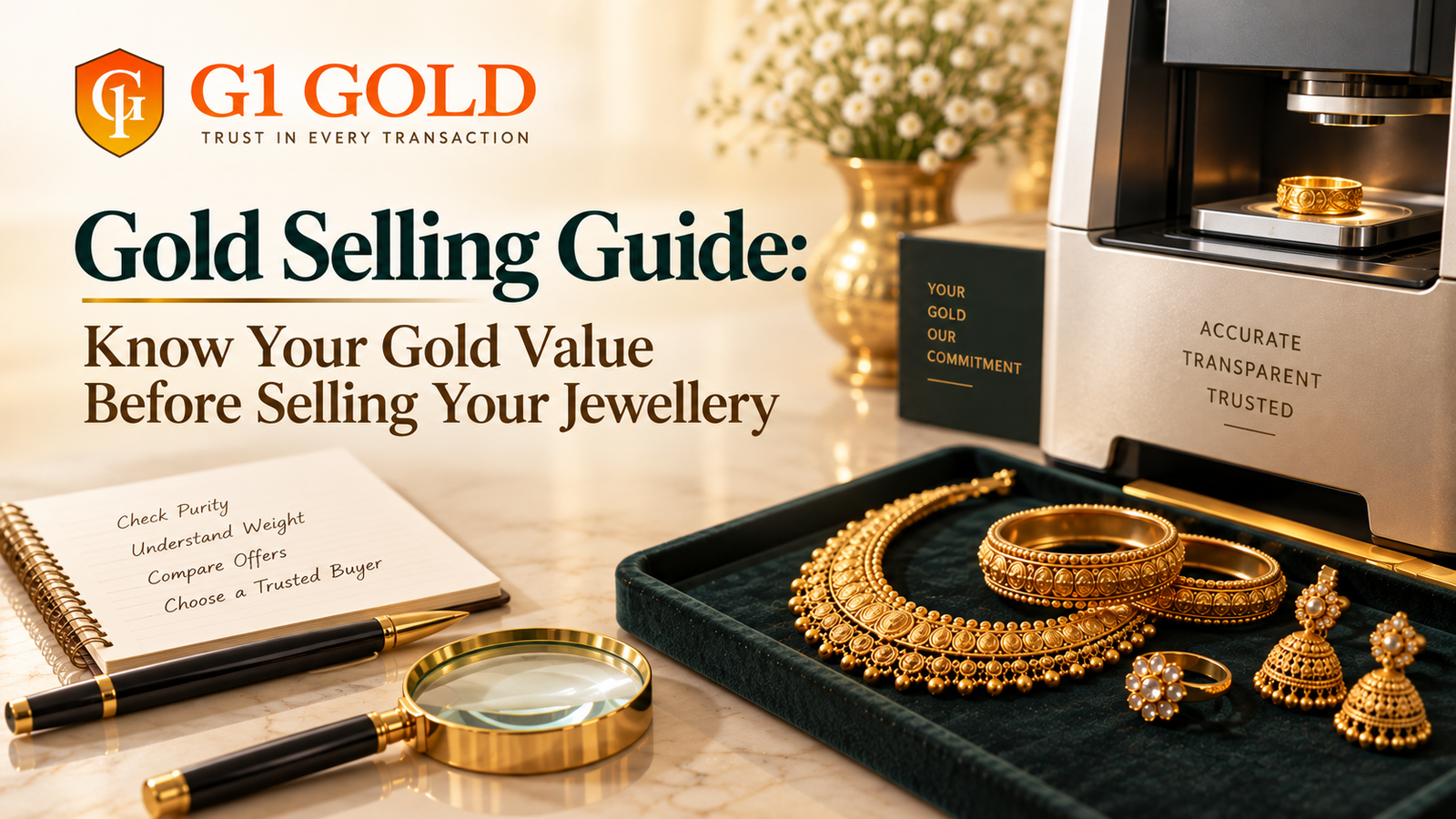
    Gold Selling Guide: Know Your Gold Value Before Selling Your Jewellery

    This Gold Selling Guide begins with a simple idea: selling jewellery is often a practical financial decision, but it should not begin at the counter of a gold buyer. It should begin with understanding what you actually own.

    Many people carry old chains, rings, bangles, earrings, coins, or unused jewellery without knowing their approximate gold value. When the time comes to sell, they may focus only on the amount being offered. That can make it difficult to judge whether the valuation is reasonable.

    Knowing your gold value before selling your jewellery gives you a clearer starting point. You can understand what affects the value, ask better questions during evaluation, and make a more informed decision.

    This gold selling guide explains the important things you should know before taking your jewellery for valuation.

    Why Should You Know Your Gold Value Before Selling?

    Gold jewellery has two different values during its lifetime.

    When you purchase jewellery, the price can include the gold value, making charges, design costs, taxes, brand premiums, and charges for stones or decorative work.

    When you sell jewellery, however, the evaluation is primarily based on the recoverable gold contained in the item.

    That is why the original purchase bill may show a higher amount than the resale value.

    Before visiting a gold buyer, it helps to understand:

    • What type of gold jewellery you have
    • The approximate weight of the jewellery
    • Its stated karat or purity
    • Whether the jewellery contains other materials
    • The prevailing gold rate relevant to its purity
    • How the buyer calculates the value

    A basic understanding is usually enough to follow the valuation process confidently.

    Start by Understanding the Karat of Your Jewellery

    Karat indicates the purity level of gold.

    Pure gold is commonly referred to as 24-karat gold. Jewellery is usually made with a lower karat because pure gold is soft and is often mixed with other metals for strength and durability.

    Common jewellery purity levels include:

    • 24K: Close to pure gold
    • 22K: Commonly used for traditional gold jewellery
    • 18K: Frequently used in designer and stone-studded jewellery
    • 14K: Contains a lower proportion of gold and more other metals

    A jewellery item that weighs 20 grams does not necessarily contain 20 grams of pure gold. Its actual gold content depends on its purity.

    Check Your Jewellery Before Visiting a Buyer

    Before taking your jewellery for evaluation, spend a few minutes reviewing what you have.

    Look for hallmarks, karat markings, purchase records, old invoices, certificates, or other information that may help you identify the jewellery.

    For example, you might find markings such as:

    • 916 for 22K gold
    • 750 for 18K gold
    • 585 for 14K gold

    These markings can give you an initial indication of the jewellery’s stated purity.

    However, a buyer may still test the jewellery to confirm its actual composition.

    Understand the Difference Between Jewellery Weight and Gold Content

    One common misunderstanding while selling jewellery is assuming that the complete weight represents gold.

    Some jewellery may contain:

    • Gemstones
    • Beads
    • Threads
    • Clasps
    • Decorative materials
    • Other metals used for design

    Because of this, the total jewellery weight and the amount of recoverable gold may be different.

    A clear evaluation process should help you understand which parts of the jewellery are considered and how the gold content is determined.

    Know the Gold Rate Before You Visit

    Gold prices change regularly.

    Checking the prevailing gold rate before visiting a buyer gives you useful market context. However, the rate you see online is not automatically the exact amount you will receive.

    The final value depends on factors such as:

    • Confirmed purity
    • Recoverable gold content
    • Applicable market rate
    • The buyer’s valuation method
    • Any clearly disclosed adjustments

    Use the market gold rate as a reference point rather than assuming every gram will be valued at the headline 24K rate.

    Gold Selling Guide: Ask How Your Jewellery Is Being Evaluated

    A good gold-selling experience should not leave you wondering how the offer was calculated.

    During the evaluation, ask questions such as:

    • What purity was identified?
    • What weight is being considered?
    • Which gold rate is being used?
    • How was the final value calculated?
    • Are there any adjustments?
    • Can the calculation be explained before I agree?

    These questions can make the transaction easier to understand.

    At G1 Gold, customers can ask for clarity during the evaluation so they understand how the value of their gold is being determined before proceeding.

    Do Not Judge Your Jewellery Only by Its Appearance

    Old jewellery can sometimes look dull, scratched, damaged, or outdated. That does not automatically mean it has lost its underlying gold value.

    Similarly, a heavy-looking jewellery piece does not always mean it contains a higher amount of gold.

    A simple old chain may contain more recoverable gold than an elaborate stone-studded piece that looks larger.

    This is why visual appearance alone should never be your main method of estimating value.

    Separate Emotional Value From Market Value

    Jewellery often carries memories.

    A ring may have belonged to a parent. A chain may have been purchased for a wedding. Bangles may have been stored for years because they were connected with an important family event.

    When selling jewellery for financial reasons, it is useful to separate sentimental value from market value.

    Ask yourself whether you are comfortable selling the item before beginning the transaction.

    Once the jewellery has been sold and processed, reversing the decision may not be possible.

    Compare the Calculation, Not Just the Final Number

    If you compare more than one gold buyer, do not look only at who gives the highest verbal quote.

    Instead, compare the complete valuation method.

    Pay attention to:

    • How purity is checked
    • Whether the testing process is explained
    • Which weight is considered
    • Which gold rate is applied
    • Whether calculations are shown clearly
    • Whether the final payment matches the agreed valuation

    A higher quote does not automatically mean a better transaction if the calculation behind it is unclear.

    Documents and Preparation Before Selling Gold

    Requirements can vary depending on the buyer and the transaction, so it is helpful to carry valid identification and any jewellery-related documents you have.

    Consider carrying:

    • Government-issued identification
    • Purchase invoice, if available
    • Hallmark or certificate information
    • Bank or payment details if required
    • Jewellery stored securely in a pouch or box

    Preparing these items beforehand can make the selling process more organized.

    Gold Selling Guide: Final Checklist Before You Sell Your Jewellery

    Before accepting an offer, make sure you understand the complete transaction.

    Ask yourself:

    • Do I know the purity of my gold?
    • Do I understand the weight being valued?
    • Do I know which gold rate is being applied?
    • Has the calculation been explained clearly?
    • Do I understand the final amount I will receive?
    • Am I comfortable proceeding with the sale?

    If the answer is yes, you are in a better position to make an informed decision.

    Conclusion

    Knowing your gold value before selling your jewellery is not about calculating an exact resale amount at home. It is about understanding the basic factors that determine value.

    Learn the approximate purity of your jewellery, check the current gold rate, understand how the item is evaluated, and ask how the final amount is calculated.

    A transparent process, such as the one followed at G1 Gold, can help customers understand each stage of the evaluation before they decide whether to proceed.

    Instead of focusing only on the final offer, you can follow each stage of the valuation and decide whether the calculation makes sense to you.

    That is the purpose of a useful gold selling guide: helping you understand your gold before deciding what to do with it.

    Frequently Asked Questions

    1. How can I know my gold value before selling my jewellery?

    Start by checking the jewellery’s karat, approximate weight, available hallmark information, and the prevailing gold rate. The actual selling value should then be confirmed through professional evaluation.

    2. Is the current gold rate the same as the amount I will receive?

    Not necessarily. Market rates are reference rates. Your actual valuation depends on the purity and recoverable gold content identified during evaluation.

    3. Does old jewellery lose its gold value?

    Age alone does not determine the underlying gold content. Even jewellery that looks old, damaged, or outdated may still contain gold that can be evaluated.

    4. Do I need the original purchase bill to sell gold?

    Requirements can vary. An original jewellery bill can provide useful information, but identification and verification requirements depend on the buyer’s process.

    5. What should I check before accepting a gold-selling offer?

    Confirm the purity result, weight considered, applicable gold rate, valuation calculation, and final payment amount before you proceed.
     

  • Selling Gold Made Simple: Gold to Cash Journey from Testing to Payment

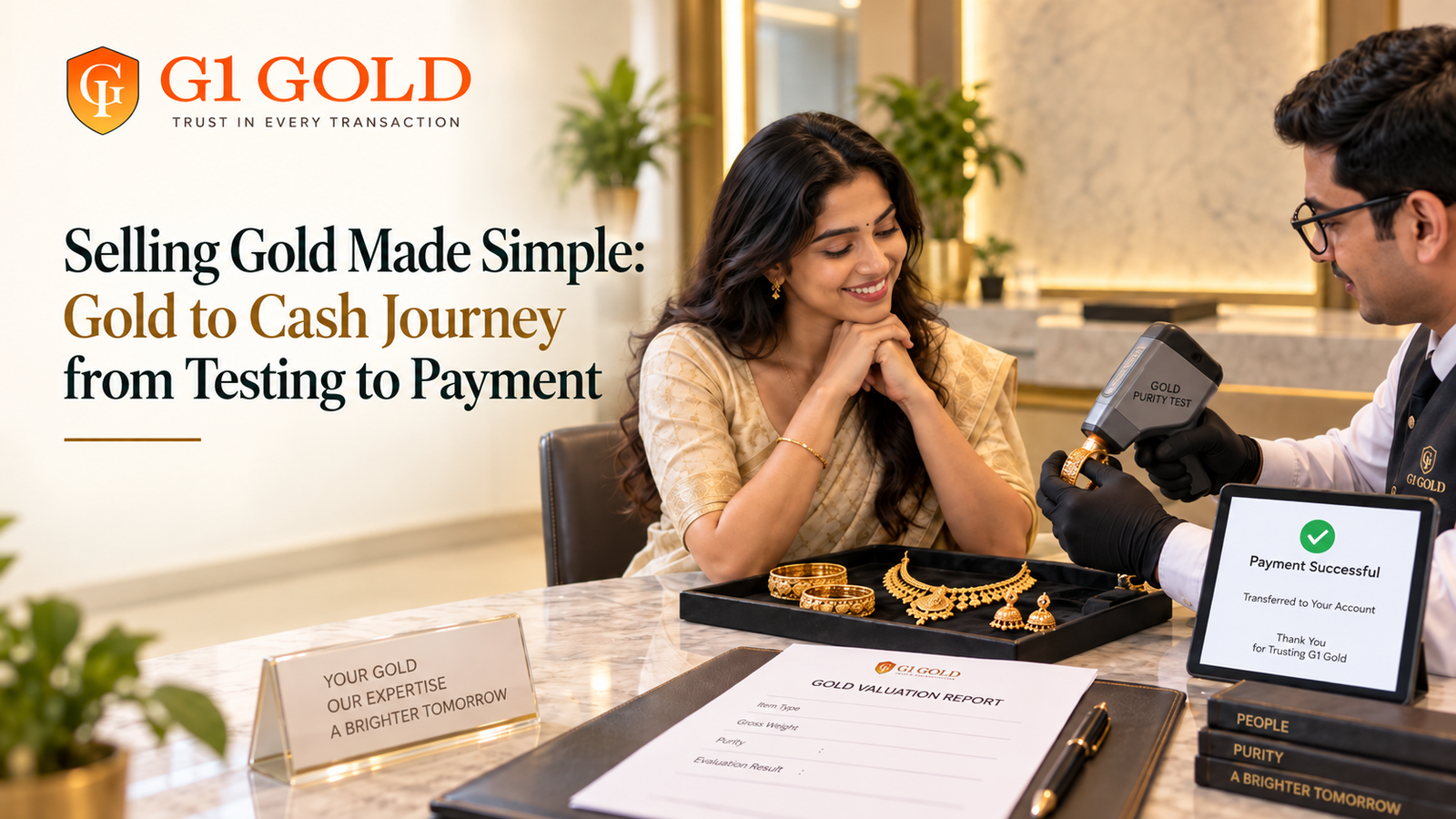
    Selling Gold Made Simple: Gold to Cash Journey from Testing to Payment

    Selling gold can feel like a big decision, especially when the jewellery or gold items have been part of the family for years. The Gold to Cash Journey often begins when people need funds for an urgent expense, want to use unused jewellery more productively, or simply prefer converting old gold into cash.

    Whatever the reason, understanding the complete process before visiting a gold buyer can make the experience much easier.

    At G1 Gold, selling gold is not simply about handing over jewellery and receiving money. Several important steps take place between the first inspection and the final payment. Knowing these steps helps you understand how the gold is checked, how its value is calculated, and what you should verify before completing the transaction.

    Why Understanding the Gold to Cash Journey Matters

    Many people own gold but have never sold it before. Because of this, the process can sometimes feel unfamiliar.

    Questions naturally arise:

    • How will the purity of my gold be checked?
    • Will stones and other materials affect the weight?
    • Which gold rate will be used?
    • How is the final amount calculated?
    • How quickly will payment be made?

    A professional gold selling process should provide clear answers to these questions. You should be able to understand what is happening at every stage rather than receiving only a final amount without explanation.

    Step 1: Bringing Your Gold for Evaluation

    The journey begins when you bring the gold jewellery, coins, ornaments, or other accepted gold items for evaluation.

    You do not necessarily need perfectly maintained jewellery. Old, broken, damaged, outdated, or unused ornaments can still contain valuable gold.

    Before visiting a buyer, it can be helpful to gather all the pieces you are planning to sell. If you have previous purchase bills or certificates, you may carry them as supporting documents, although the actual value usually depends on the current purity and weight of the gold.

    At this stage, the gold buyer should explain the evaluation process before beginning.

    Step 2: Checking the Gold Purity

    Purity is one of the most important factors in determining gold value.

    Gold jewellery is available in different purity levels such as 22K, 18K, and other combinations depending on how the jewellery was manufactured.

    Modern gold buyers may use machine-based testing methods such as XRF technology to analyse the composition of the gold. This type of testing helps determine the percentage of gold and other metals present in the item.

    A transparent purity check is important because even jewellery that looks similar may have different purity levels.

    For example, two necklaces may weigh almost the same but produce different valuations because their actual gold content is different.

    During purity testing, customers should ideally be able to:

    • See the testing process
    • Understand the purity result
    • Ask questions about the reading
    • Know how purity affects the final valuation

    This makes the process easier to follow and reduces uncertainty.

    Step 3: Determining the Actual Gold Weight

    After purity testing, the jewellery is weighed.

    The total weight of an ornament does not always represent the actual weight of gold. Jewellery may contain stones, beads, enamel, threads, hooks, or other non-gold materials.

    These components may need to be considered separately while calculating the value.

    The buyer should clearly explain:

    • Gross weight of the jewellery
    • Weight of any non-gold materials
    • Net gold weight considered for valuation

    Seeing the weight directly on the weighing scale gives the seller a clearer understanding of how the final figure is being calculated.

    Step 4: Checking the Applicable Gold Rate

    Gold prices change regularly based on market conditions.

    Before completing a sale, check the gold rate being considered for your jewellery. The rate used should also correspond with the purity level of the gold.

    A higher market rate does not automatically mean every piece of jewellery receives the same per-gram value. The final calculation depends on the tested purity, net gold weight, and the valuation method followed by the buyer.

    A transparent buyer should explain the applicable rate instead of simply presenting a final amount.

    Step 5: Understanding the Final Valuation

    Once purity, weight, and the applicable rate are known, the buyer can calculate the estimated value of the gold.

    This is the stage where sellers should slow down and understand the calculation.

    Ask for a clear explanation of:

    • Tested purity
    • Net gold weight
    • Gold rate considered
    • Any deductions
    • Final payable amount

    You should know why a particular amount is being offered before agreeing to the sale.

    If there are deductions or service-related charges, they should be explained clearly rather than appearing unexpectedly at the end of the transaction.

    Step 6: Reviewing the Offer Before Selling

    Receiving an offer does not mean you must immediately complete the transaction.

    Take a moment to review the amount and ask questions if anything is unclear.

    You may want to confirm:

    • Whether the purity result matches what was explained
    • Whether the correct weight has been considered
    • Whether there are hidden or additional deductions
    • Whether the payment amount matches the valuation shown

    A reliable process should give you enough information to make a comfortable decision.

    Step 7: Completing Verification and Documentation

    Gold transactions may require basic identification and documentation depending on the transaction value, company policies, and applicable regulations.

    Customers may be asked to provide documents such as an identity proof, address proof, or bank details where required.

    This step helps maintain proper transaction records and protects both the seller and the gold-buying company.

    Always provide documents only to a legitimate business and make sure you understand why the information is required.

    Step 8: Receiving the Payment

    The final stage of the Gold to Cash Journey is payment.

    Once you approve the valuation and complete the required documentation, the payment can be processed through the available payment method.

    Depending on the gold buyer, payment may be provided through options such as:

    • Bank transfer
    • UPI
    • Other approved digital payment methods
    • Cash where permitted and applicable

    Before leaving, confirm that the payment amount matches the amount you agreed upon.

    You should also keep any invoice, acknowledgement, receipt, or transaction document provided during the sale.

    What Makes a Gold to Cash Journey Transparent?

    A smooth gold-selling experience is not only about receiving money quickly. Transparency throughout the process is equally important.

    Look for a process where:

    • Gold is tested in front of you
    • Purity results are explained clearly
    • Weight is visible
    • The applicable gold rate is disclosed
    • Deductions are explained in advance
    • The final amount is shown before approval
    • Payment details are properly documented

    These small details can make a significant difference when you are selling something as valuable as gold.

    Common Mistakes to Avoid During the Gold to Cash Journey

    People often focus only on the final amount and overlook the steps used to calculate it.

    Avoid these common mistakes:

    • Selling without checking the current gold rate
    • Not asking about purity testing
    • Ignoring the difference between gross and net weight
    • Accepting unexplained deductions
    • Choosing a buyer only because of an unusually high advertised rate
    • Leaving without collecting transaction records

    Taking a few extra minutes to understand the process can help you make a more informed decision.

    Conclusion

    Turning gold into money should not feel confusing.

    The complete Gold to Cash Journey should take you through a clear sequence of purity testing, weight verification, rate confirmation, valuation, documentation, and payment.

    When each stage is visible and properly explained, you can understand exactly how the value of your gold has been determined.

    At G1 Gold, instead of focusing only on how quickly you can sell, attention is also given to transparency, accuracy, and communication throughout the process. A well-explained transaction gives you greater confidence from the moment your gold is tested until the payment reaches you.

    Frequently Asked Questions

    1. How is the value of gold calculated during the Gold to Cash Journey?

    The value is generally calculated using the tested purity of the gold, net gold weight, applicable gold rate, and any clearly disclosed deductions or charges.

    2. Can broken or old jewellery be sold during the Gold to Cash Journey?

    Yes. In many cases, broken, damaged, outdated, or unused jewellery can still be evaluated based on its actual gold content.

    3. Why is purity testing necessary before selling gold?

    Purity testing determines how much actual gold is present in an item. Since jewellery may contain other metals, accurate purity testing is important for calculating its value.

    4. Is the total jewellery weight used for valuation?

    Not always. Jewellery may contain stones, beads, threads, or other non-gold materials. The net gold weight may therefore be different from the total weight of the ornament.

    5. What should I check before accepting the final payment in the Gold to Cash Journey?

    Verify the purity result, net weight, gold rate, deductions, and final payable amount. Make sure the payment received matches the valuation you approved.